Skip to content

Posts tagged ‘Wiltshire’

Dark Bush Cricket

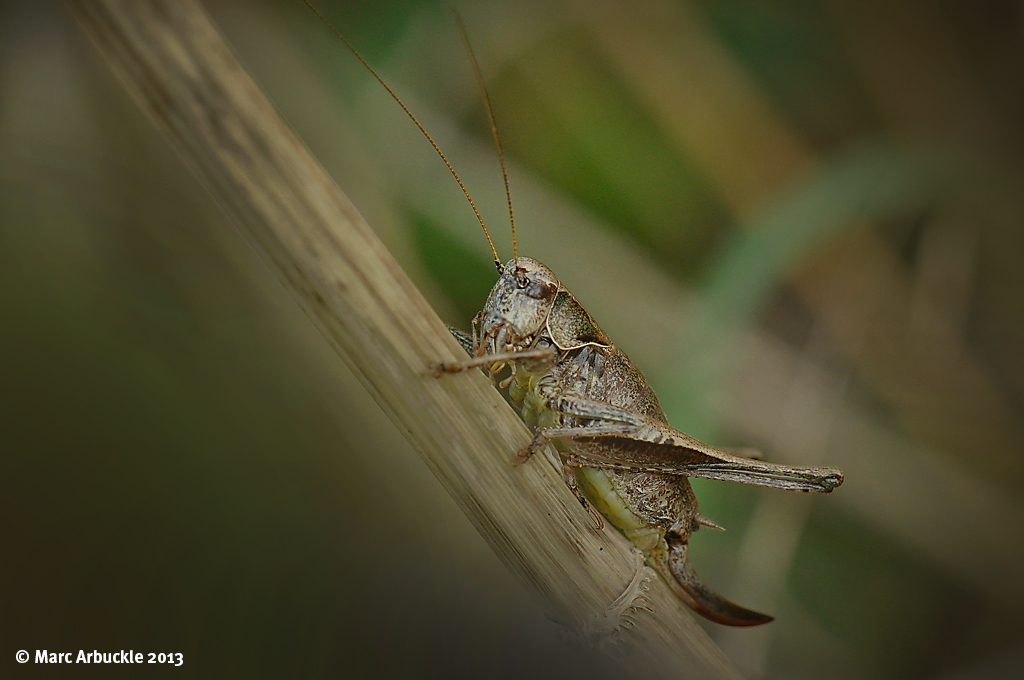
Dark Bush Cricket – Pholidoptera griseoaptera – Female

Pholidoptera griseoaptera – Female

On Saturday I attended a course on Grasshoppers, Crickets and Allied Insects. Allied insects covers groundhoppers, our native cockroaches and the earwigs. So what did I learn? In the UK there appear to be eleven grasshoppers, about fourteen crickets, four true crickets and three groundhoppers, all of which can be identified in the field or from photographs and then keyed out. So for once there isn’t really any need to collect specimens, particularly as most will lose their colour after death anyway. Three of the crickets, the Field Cricket, the Mole Cricket and the fabulously named Wartbiter are protected under the 1981 Wildlife and Countryside Act and so cannot even be handled without a licence from Natural England. Apparently even taking photographs of them is discouraged as this could be interpreted as interference.

Read more

Blue rain flowers

Harebell – Campanula rotundifolia

Campanula rotundifolia

I’m not that good at identifying wild flowers. Botany is definitely a subject I could do better in. But then by most people’s standards I’m not exactly a dullard either. I can put a name to most of the common stuff, it’s just there’s still quite a bit that’s a mystery. One wild flower I can identify is the Harebell Campanula rotundifolia.

A couple of Sunday’s ago I went looking for the Adonis Blue butterfly at Martin Down but pretty much as soon as I arrived it absolutely lashed it down. While I waited for the insects to towel themselves dry I got distracted by these delicate little violet-blue flowers. The water droplets and soft light adding to their attractiveness.

Generally I focus on taking reference shots rather than photos for their artistic merit. But as I had my waterproofs on and time to kill I took a few photographs lying down on the wet ground and experimented with the depth of field. I quite like the increasingly blurry background but can’t help thinking how I’d like to see a pristine water-droplet coated Adonis Blue perched on the right-hand side of the nearest flower.

These pretty little flowers are known as Bluebells in Scotland and were once used in the manufacture of the blue dye used in tartan. Incidentally the name Harebell is a reference to the fact that these bell-like flowers can often be found where you find hares. Both are fond of dry, open grassland. On a similar theme witches are thought to be able to transform themselves into hares by drinking the milky sap. North American Indians call them ‘blue rain flowers’ as they believe picking them will cause it to rain. Well, it wasn’t me.

The cannabilistic Cinnabar

Cinnabar Moth Caterpillar – Tyria jacobaeae

Tyria jacobaeae

This striking gold and black and surprisingly hairy caterpillar is the larval stage of the scarlet and dark charcoal Cinnabar Moth Tyria jacobaeae. The adult can be identified by the two bright red spots and the long red stripe down the leading edge of its dark grey/black forewing and its all red hindwing. It is named after the mineral ‘cinnabar’ once used by artists as a red pigment for painting. The bright colours of both the adult and larvae are a warning to predators that it is mildly poisonous.

Read more

Gatekeeper or Meadow Brown?

Gatekeeper Butterfly – Pyronia tithonus

Pyronia tithonus

This is the Gatekeeper Pyronia tithonus formerly and perhaps more appropriately known as the Hedge Brown or ‘Hedge Eye’. This butterfly can only be confused with a female Meadow Brown Maniola jurtina. However, in comparison it is much smaller and overall a much brighter orange. Where the Meadow Brown has one white spot in the centre of the black eye-spot on the upper wing, the Gatekeeper, as you can see, almost always has two. Also, with wings folded the Gatekeeper has a row of small white dots on its lower underwing, whereas the latter, if it has any, not all do, will have small dark dots. Plus, you are much more likely to find it like this, wings wide-open, basking on a leaf in a hedgerow soaking up the sun.

But beware, both species are subject to variation. I’ve seen Meadow Brown’s with two white spots and Gatekeeper’s with one. So it’s worth keeping a look out for aberrations. If you are lucky you may even find one of the heavily spotted multiocellata variations which can be very pretty indeed. Just remember to carry your camera, because of course I didn’t.

Read more

Small Tortoiseshell

Small Tortoiseshell – Aglais urticae

Aglais urticae

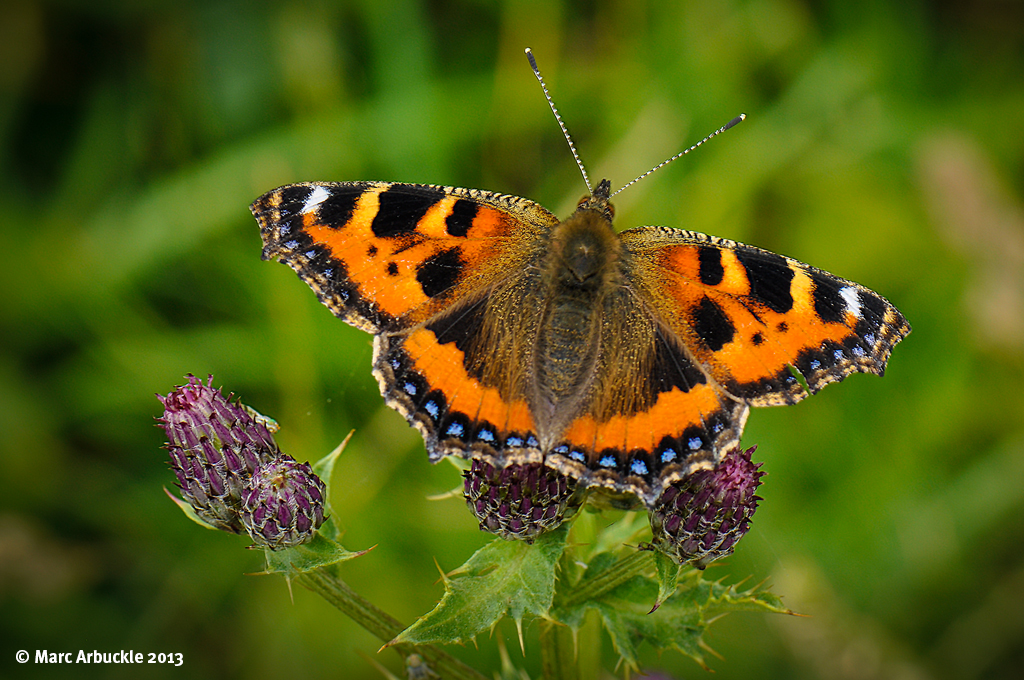
This is a butterfly we’ve taken for granted. The Small Tortoiseshell Aglais urticae was once one of our most familiar and numerous garden visitors. Sadly it is no longer as common as it once was. In recent years, particularly in the south it has declined, possibly due to predation by the parasitic fly Sturmia bella. Somehow our buddleia bushes just don’t look quite the same without these butterflies nectaring on every other mauve, orange-centred flower head. But, let’s not get overly maudlin. Instead let’s reflect on what a stunning little insect this still is. Gorgeous orange set off with deft little touches of black, dabs of yellow and white, ringed with a necklace of brilliant turquoise. What’s not to like?

Read more

A morning with the Emperor and the Admiral

White Admiral – Limenitis camilla (Male)

Limenitis camilla – Male

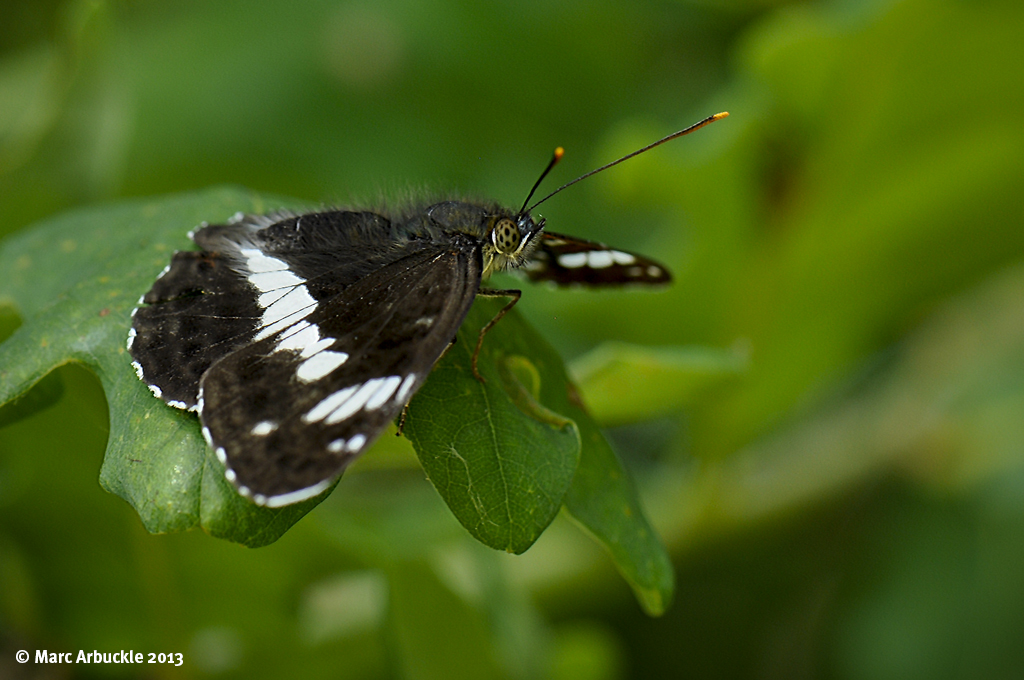
I arrived at Bentley Wood to find the car park packed, not only with cars, but with people gazing upwards. The nearest chap whispered in hushed tones that we were in the presence of ‘His Majesty’ the Purple Emporer Apatura iris. A first for me. An elusive, almost mythical butterfly that until then I’d only read and dreamt about. I hadn’t imagined for one moment that one day I’d simply step out of my car and find it waiting for me. If I’d known, I would have had it cleaned and valeted.

Read more

Common Blue

Common Blue – Polyommatus icarus (Male)

Polyommatus icarus – Male

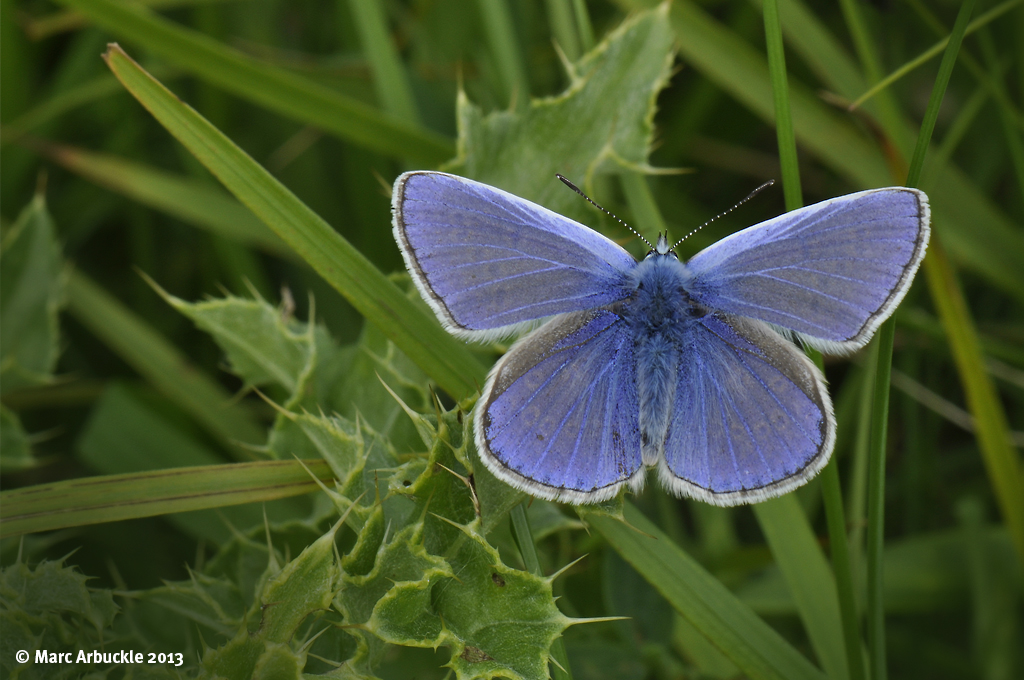
Last Saturday morning was spent pootling about on a favourite chalk ridge taking photos of powder blue butterflies and scarlet moths. All rather glorious really. It was warm and overcast, buzzards were mewing overhead and skylarks were ascending to the heavens. I was in heaven too as the conditions were ideal for photography and despite the fabulous weather I had the whole hillside to myself – didn’t see another soul. How fab is that?

Read more

Blue-tailed Damselfly

Blue-tailed Damselfly – Ischnura elegans

Ischnura elegans – Male

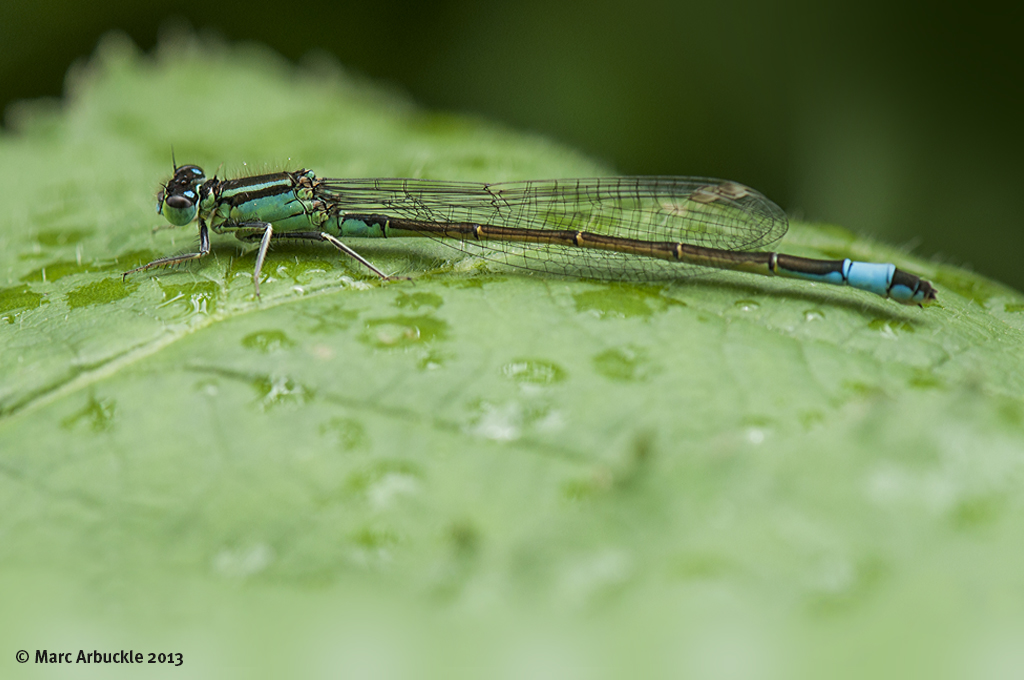
The weekend a couple of weeks back now didn’t start well. I drove to Martin Down in Hampshire hoping to see the Marsh Fritillary butterfly only to be greeted with wind and horizontal rain. Sitting in the car listening to Radio 4 didn’t help, nor did muttering to myself. Giggling at a couple of twitchers in bright blue anoraks carrying a tripod and scope large enough to zoom in on a bird in France amused me for a while. But hey, there’s only so much chortling you can do on your own in a car in the middle or nowhere before it begins to look weird, so I drove home again. On Sunday I awoke to a leaden sky and… drizzle. Much swearing ensued. Ever the optimist I set off to Langford Lakes for a Dragonfly walk and talk by Steve Brooks from the Natural History Museum, London. And what an interesting talk it proved to be. Read more

His Grace and The Grizzle

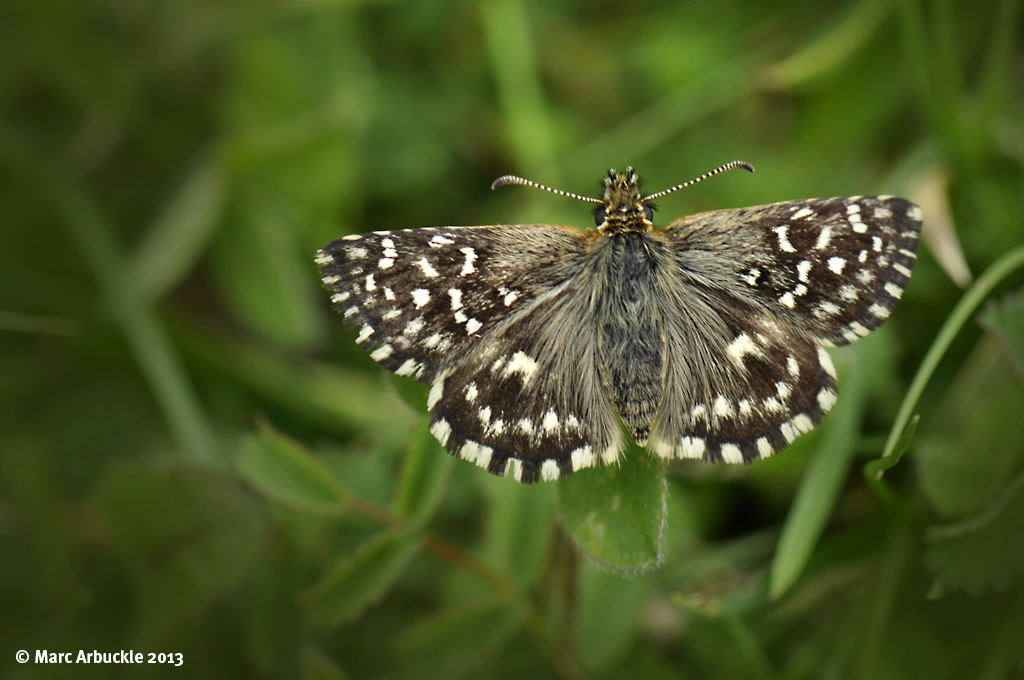
Grizzled Skipper Butterfly – Pyrgus malvae

Pyrgus malvae

Slowly working my way across a hillside covered in yellow cowslip searching for my first Duke of Burgundy butterfly of 2013 I notice a moth-like flicker of dark chocolate brown arc into the dry grass further up the slope. With my eyes fixed on the spot where it lands I move cautiously upwards to find a freshly emerged Grizzled Skipper Pyrgus malvae. It’s not ‘His Grace’ but a real stunner all the same and another first for my year list.

Read more

Pearly king

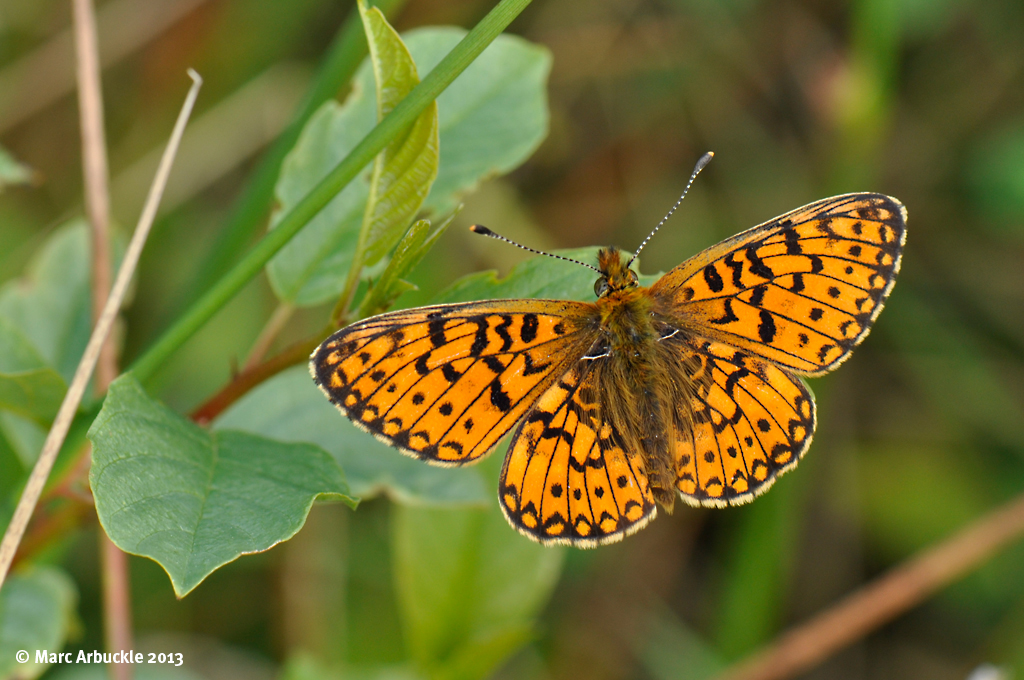
Small Pearl-bordered Fritillary – Bolaria selene

Bolaria selene – Male

This little orange firecracker is a Small Pearl-bordered Fritillary Boloria selene, a male I believe, photographed on the 9th June at Bentley Wood. This was one of the first butterflies I photographed last May when I got my macro lens and I can’t tell you how much I was looking forward to viewing the results. Particularly as this was a new species for me. What a disappointment then to discover the vast majority were either blurred or just slightly out of focus. To be fair I did manage to get a few decent shots, one of which was shortlisted for the Wiltshire Wildlife Trust’s 50th anniversary photographic competition, but believe me that was more down to luck than judgement.  Read more