Skip to content

Posts tagged ‘England’

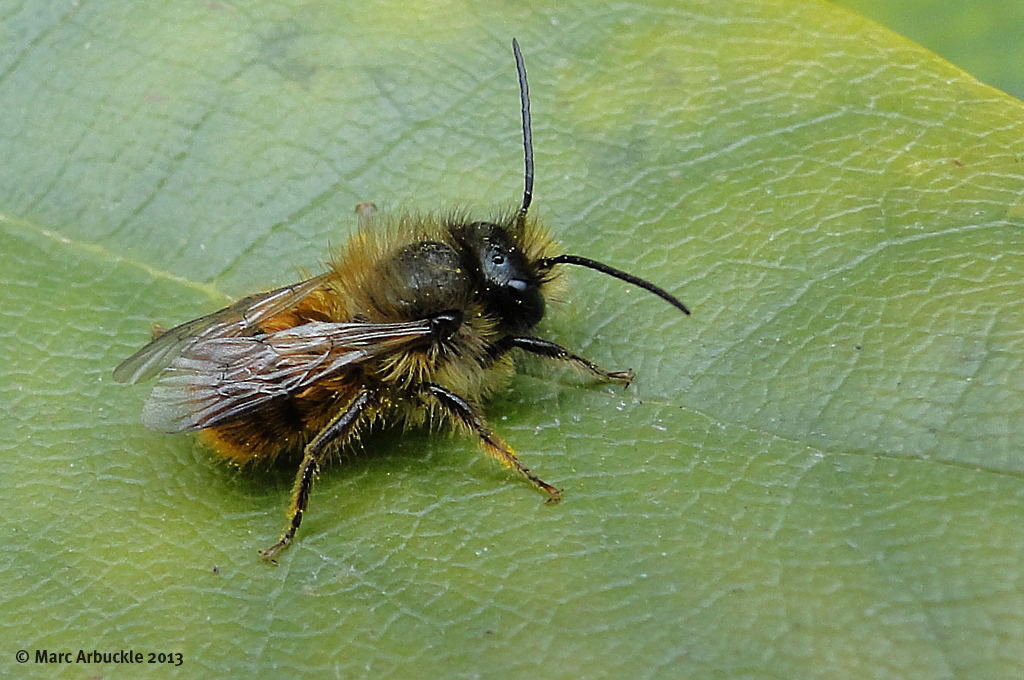
Red Mason Bee

Red Mason Bee – Osmia bicornis (Male)

Osmia bicornis – male

I really look forward to seeing these handsome little chaps each year. The Red mason bee Osmia bicornis is a species of solitary bee often seen in spring and early summer, usually from late March to early June, although this year due to the very cold weather they’ve been a little late. The males appear first, up to two weeks before the females and so like the male pictured above they spend a fair bit of time preening and sunbathing before the girls arrive.

These are extremely friendly bees. The male has no sting and the female will only sting if handled very roughly and even then the sting is very mild in comparison to the sting of a wasp, bumblebee or honey-bee. So these are good bees for children to get up close to and observe. Read more
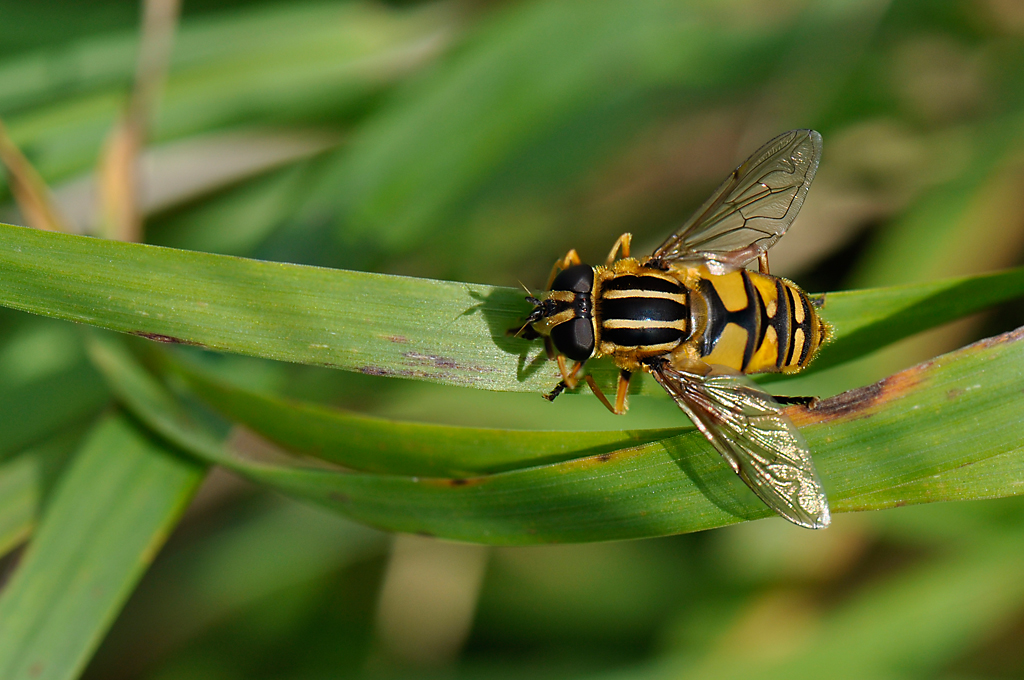
Sunbathing hoverfly

Hover-fly Helophilus pendulus

Helophilus pendulus

I took this photo of the Hoverfly Helophilus pendulus last September. Hoverflies seem to enjoy the sunshine and can often be found sunbathing. I believe this is the female. This species which is often found in gardens can be identified by its yellow face and black stripe between the eyes and the distinctive longitudinal stripes on its thorax.  Read more

Longhorn flower beetle

Longhorn flower beetle judolia cerambyciformis

judolia cerambyciformis

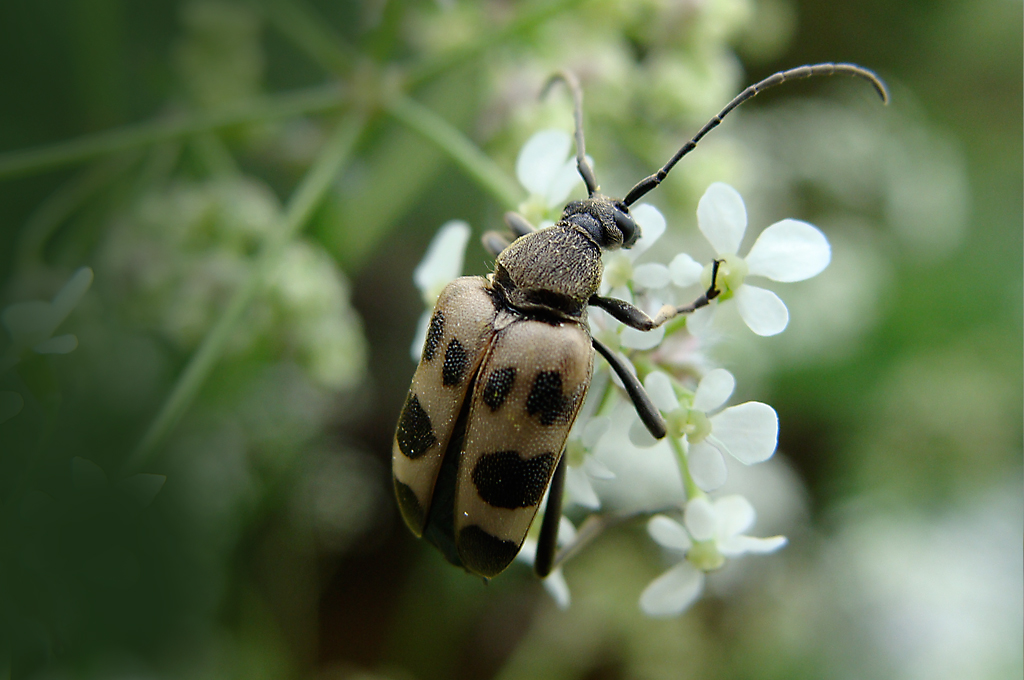
I came across this acrobatic beetle whilst walking along the banks of the river Rede in Northumbria in June 2008 whilst looking for Dippers. It’s a type of Longhorn flower beetle Judolia cerambyciformis found mainly in hilly and mountainous areas – this specimen was photographed on the edge of Keilder Forest. The larvae feed on the roots or the rotting wood of deciduous and coniferous trees before pupating below ground. The adults are between 7-12mm in length and are usually encountered on flowers from May to August. It’s a nationally scarce species so it was an unexpected bonus to find it. The species gets the name longhorn or long-horned from its very long antenna which are often longer than the body.

Read more

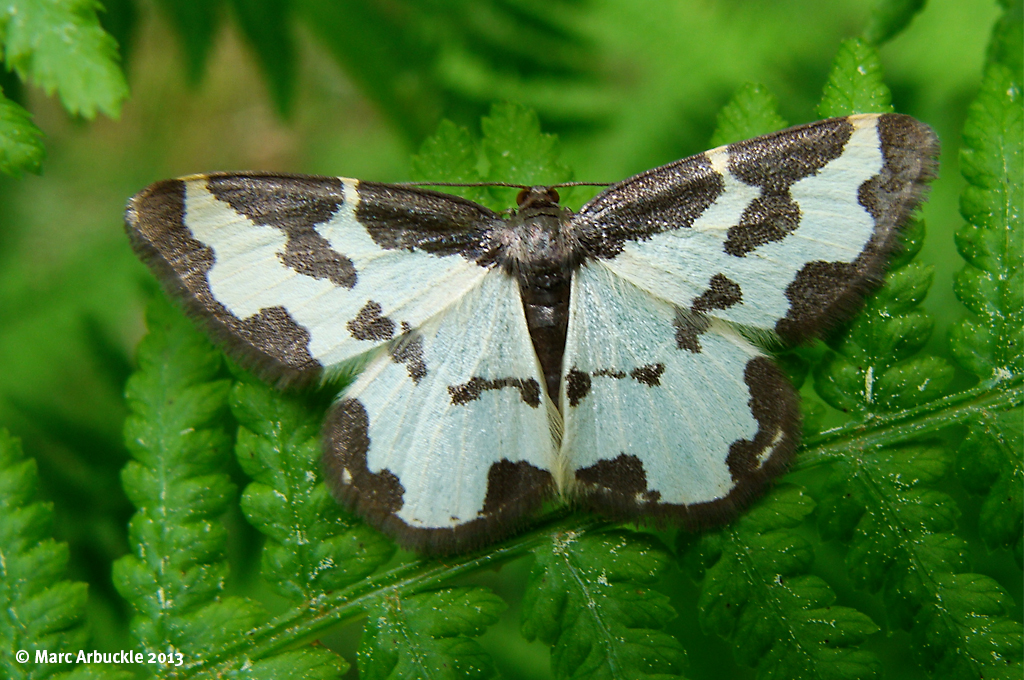
Clouded Border

Clouded Border Moth – Lomaspilis marginata

Lomaspilis marginata

I came across this rather attractive black and white moth whilst walking in Keilder Forest in Northumbria. It’s a Clouded Border Lomaspilas marginata. Although it’s a night-flyer it can often be found resting on undergrowth during the day. Most often in woodland and with a preference for damper localities. Read more

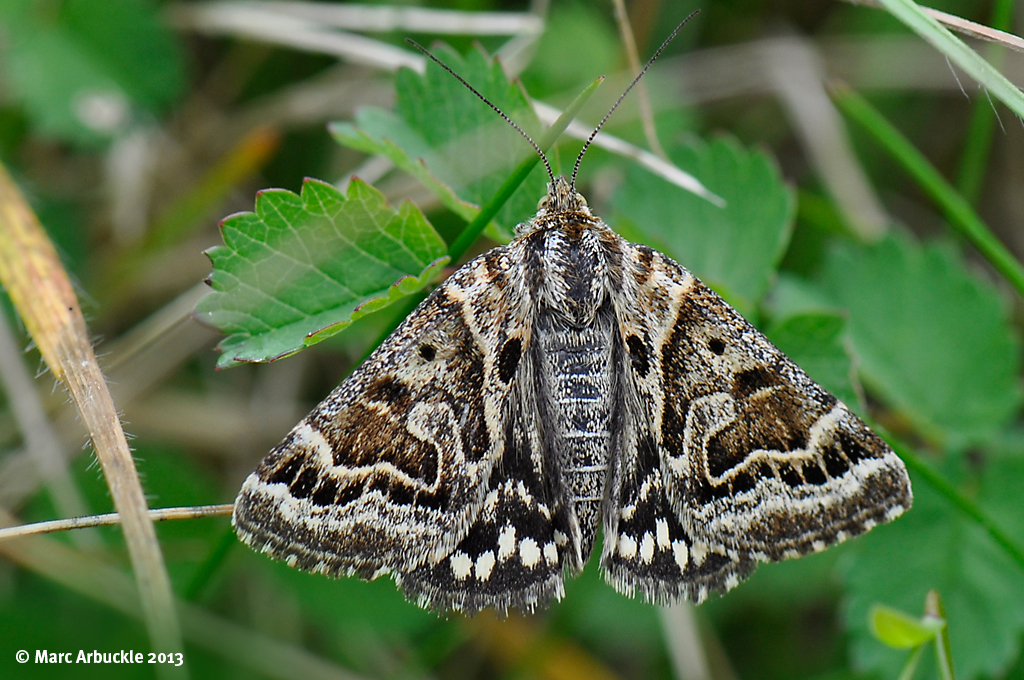
Mother Shipton

Mother Shipton Moth – Callistege mi

Callistege mi

One of the more unusual day flying moths I’ve encountered on Morgans Hill is the Mother Shipton Callistege mi which has a very distinctive cream-edged dark brown central blotch on each forewing which is said to resemble the face of an old hag or witch. Look and you’ll see a beady eye, long hooked nose, downturned mouth and knobbly chin. Read more

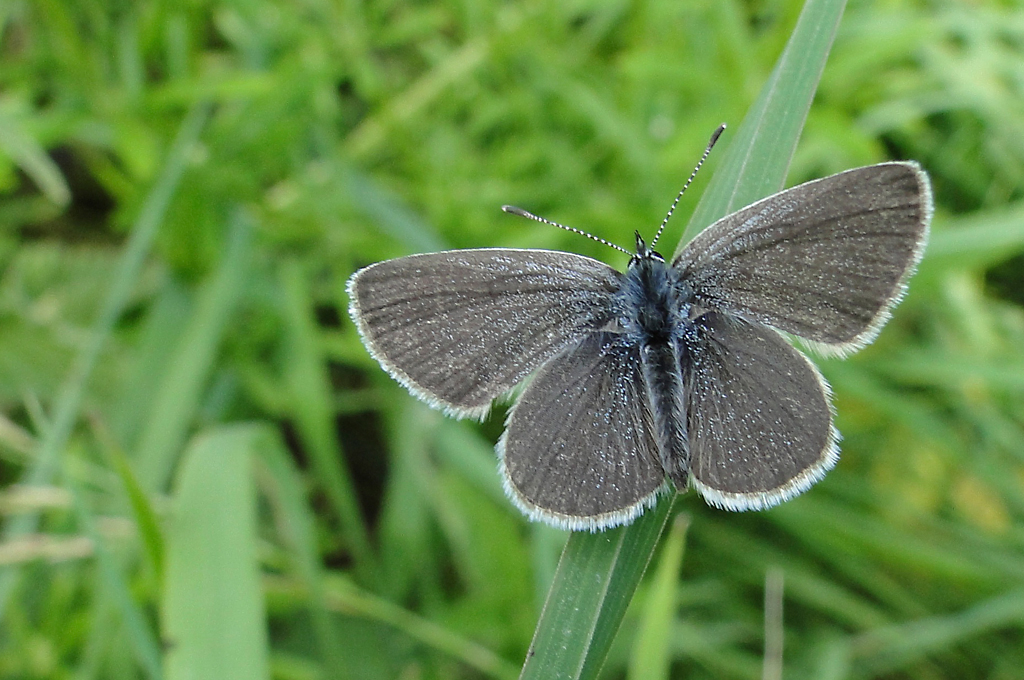
Small Blue – our smallest butterfly

Cupido minimus – Male

Cupido minimus – Male

When I saw my first Small Blue Cupido minimus I was surprised at just how tiny it is. The wingspan of our smallest butterfly can be as little as 16mm, so it’s well named. It’s rare though, being no more than locally common even in its strongholds of Gloucestershire, Wiltshire, Dorset and the Isle of Wight. Here in Wiltshire up on Morgan’s Hill I’ve only come across it in one sheltered spot and even there it’s largely confined to the base of one steep bank. Read more

Identifying digger

Cerceris rybyensis

Cerceris rybyensis – Male

I took this photo of this tiny little wasp in my garden back in early July but afterwards really struggled to identify it. My well-thumbed Guide to the Insects of Britain and Europe failed me. I didn’t even get to a genus, although I was pretty sure it was some kind of Digger Wasp. I had a look on the BWARS site, the website of the Bees, Wasps and Ants Recording Society http://www.bwars.com but blanked again. Read more

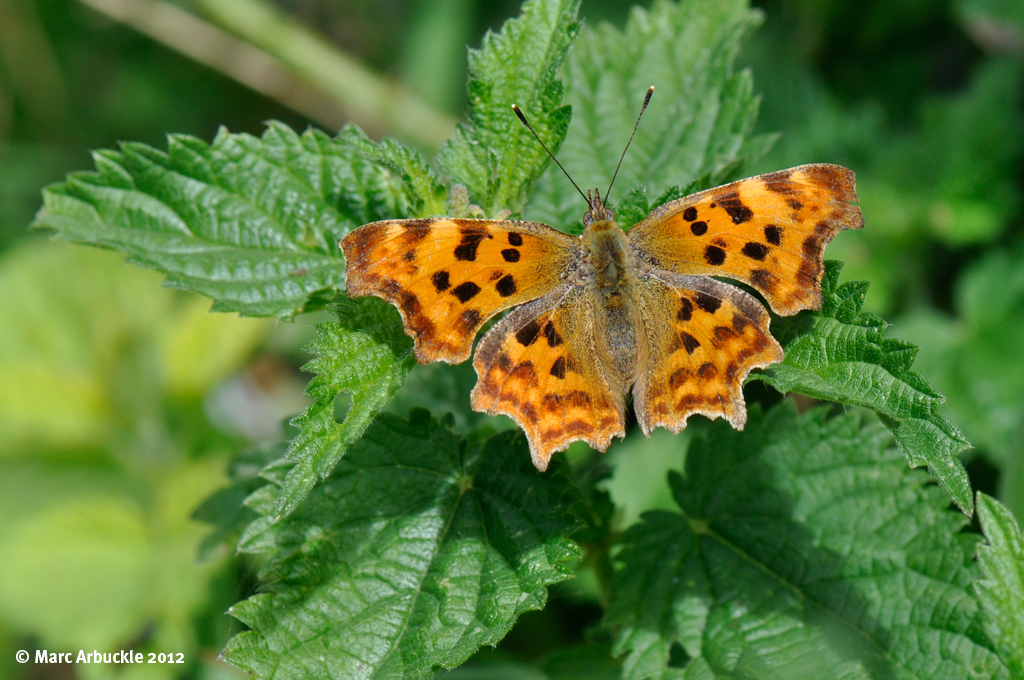
A female comma

Comma Butterfly – Polygonia c-album (Female)

Polygonia c-album – Female

The Comma Polygonia c-album is one of the earliest butterflies you might encounter each spring. I saw my first this year on the 25th March. Generally I’m sad to say that for many butterfly species numbers are in decline and this extremely wet summer really hasn’t helped. However, the Comma is one of our few butterfly success stories. Just over a century ago it was on the verge of extinction in Britain with fewer than half a dozen records in many southern counties. Then, just after the First World War it started to recover again. No one is really sure why it declined or why it has recovered but since the 1950s it has expanded its range rapidly making this raggedy-winged butterfly an increasingly common sight again, even in gardens. Read more

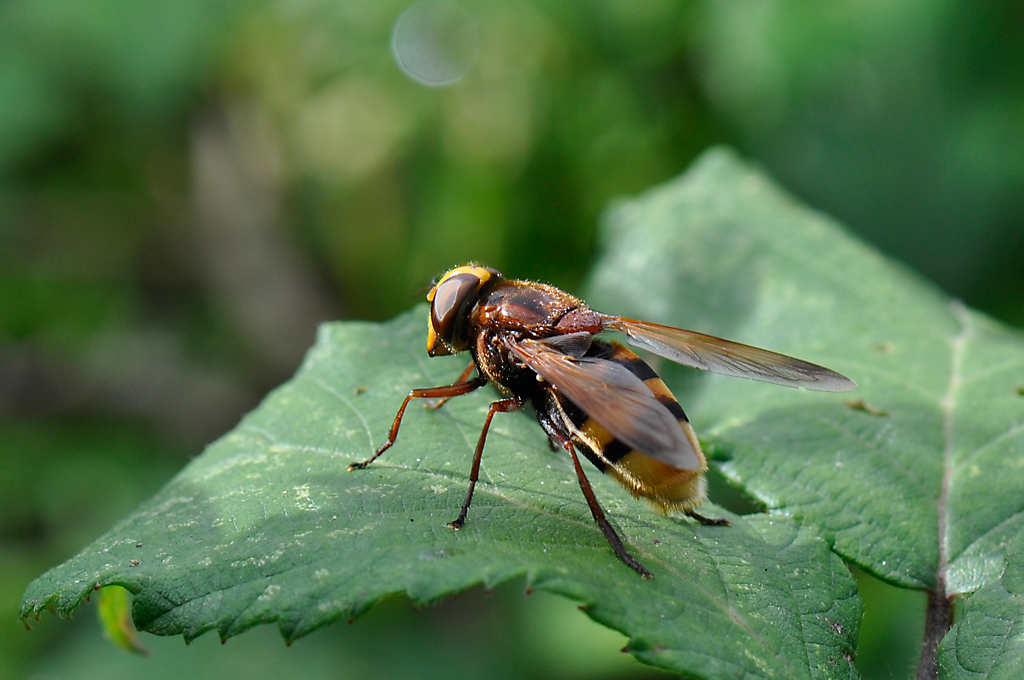
Hornet imitator (Volucella zonaria)

Volucella zonaria

Volucella zonaria

This is our largest Hover-fly Volucella zonaria and quite a whopper it is too at about 2cm in length. It’s a mimic of the hornet Vespa crabro. The female uses this disguise in order to lay eggs in the hornet’s nest, the parasitic offspring then feed on the victim’s larvaeThey’re not exactly common but easy enough to identify by their large size. As you can see it has a mainly orangey-yellow abdomen with dark bands, a yellow bottom and an almost varnished mahogany look to the thorax. And just look at those huge brown eyes and that big pointed yellow face. Once you’ve seen one they’re pretty unmistakeable. Read more

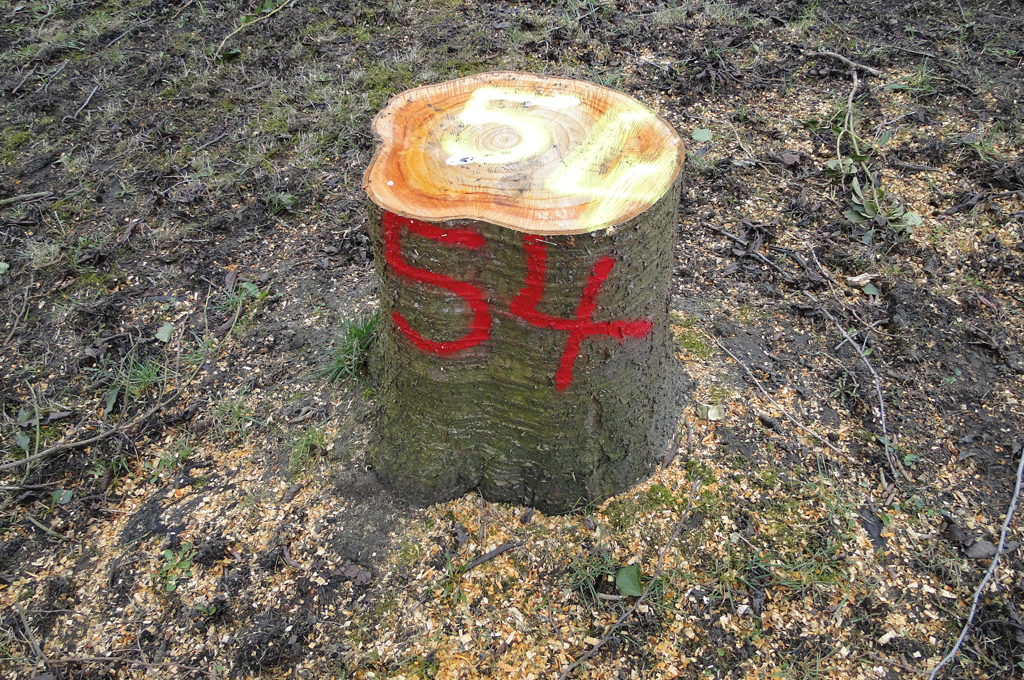
Rest in peace number 54

RIP number 54

This is the third year I’ve attended Paul Darby’s excellent Identifying Trees in Winter course at Ravensroost Wood and thankfully this time the weather was more kind to us. A male buzzard was clearly enjoying the sunshine, wheeling up into the clear blue to put on a spirited if early mating display. Gazing through yellow catkins we did our best to see if buds on twigs were opposite or alternate, whether the texture of bark was smooth or fissured, whilst the keener amongst us scrawled down notes or made quick sketches as an aide-mémoire. All this accompanied by a proper woodland soundtrack of nuthatch, coal tit, song thrush, spotted woodpecker and a tawny owl still up from a night terrorising voles. There were one or two trees I couldn’t identify, Wych Elm and Goat Willow, but overall I was pleased I had remembered far more than I had forgotten. Read more