Skip to content

Posts tagged ‘insects’

Old World Swallowtail

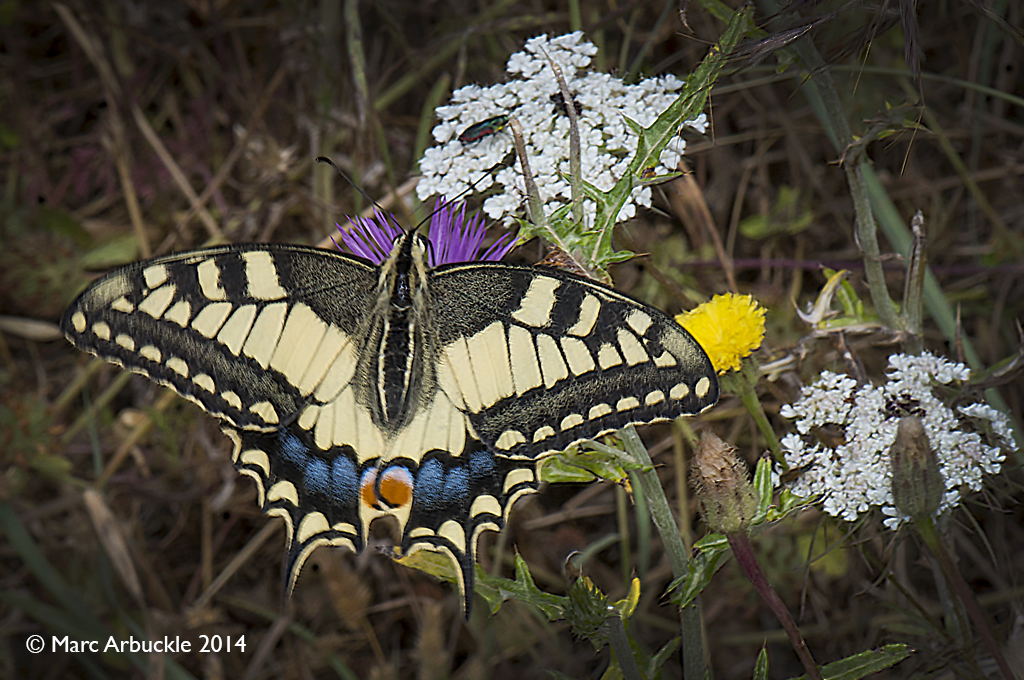
Swallowtail butterfly, papilio machaon

Papilio machaon

The slight gap in posts is due to the fact that I had to jet off to the Greek island of Kefalonia to fix my good friend Captain Corelli’s mandolin. Whilst staying in the charming harbour village of Assos I was lucky enough to get a photo of this fabulous Old World Swallowtail Papilio machaon and its equally stunning caterpillar, see photo at end of post. All it took was an early morning trek up a mountain to a small fortress built in 1593 by the Venetians.

It may surprise some readers to learn that that this spectacular insect can be seen here in England. Although the British species, Papilio machaon britannicus is restricted to the Norfolk Broads and is now one of our rarest butterflies, partly due to the distribution of the sole larval foodplant, Milk-parsley Peucedanum palustre.

In comparison britannicus is slightly smaller, darker and more strongly marked.

Read more

The lovers

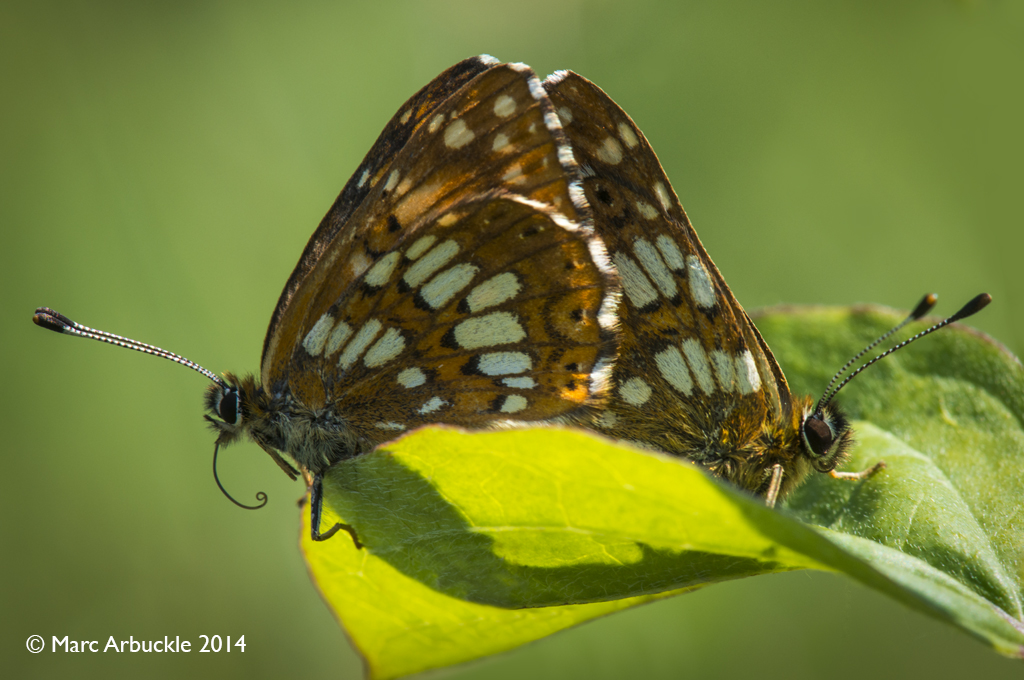
Hamearis lucina – Male and female

Hamearis lucina – Male and female

Inching along the crest of the hillside I approached ‘the hole’ with some trepidation. A somewhat optimistic visit a few weeks earlier had revealed that someone had used a tractor with a rotary cutter to flail the bramble and blackthorn to the ground and deep into the boundary hedge. To say I was a tadge cross would be to put it mildly, I may have even said a naughty word. This after all is ‘the hidden place’ that I’ve sworn to secrecy and as it is one of the few remaining spots in Wiltshire where it is possible to see good numbers of Duke of Burgundy Hamearis lucina and no people, other than the occasional dog walker, it is my entirely selfish intention to keep it so.

Read more

Blood spewers

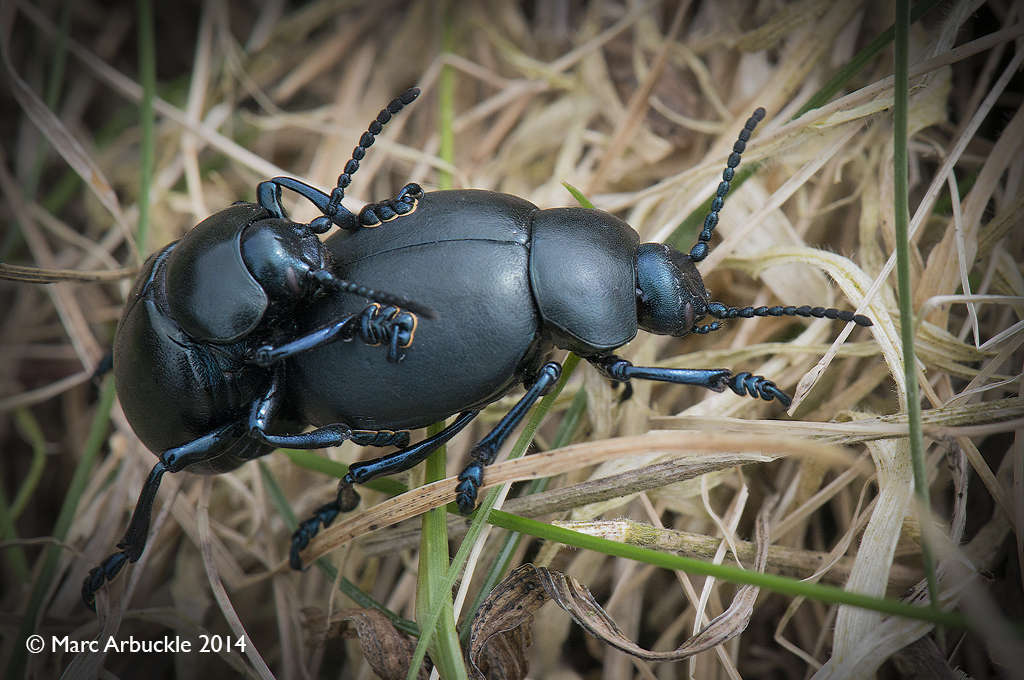
Bloody-nosed beetles, Timarcha tenebricosa

Timarcha tenebricosa, male and female

The bloody-nosed beetle Timarcha tenebricosa or blood spewer as it is sometimes known from its defensive habit of exuding a bright red-orange fluid from its mouth. This fluid is foul-tasting to predators, seriously irritating the mouth of birds and mammals. Subsequently it can sometimes be seen wandering around in daylight largely unmolested. Read more

Juniper green

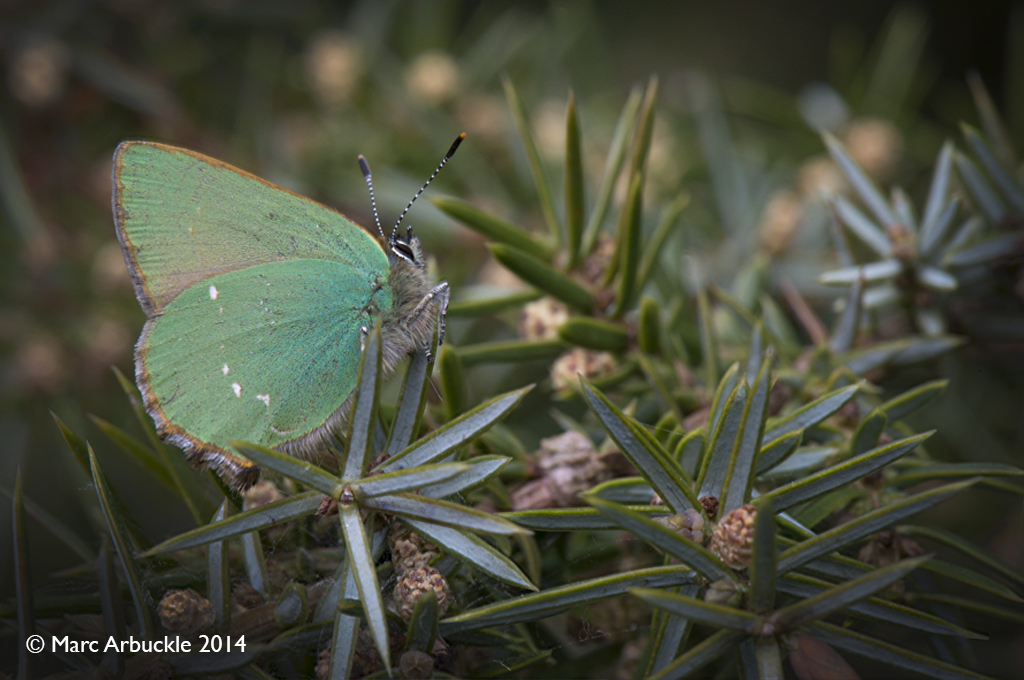
Green Hairstreak butterfly, Callophrys rubi, Male

Callophrys rubi – Male

I came across this easily overlooked green and gold-edged beauty while out on a 9 mile river amphibia walk on Salisbury Plain. It’s unusual I guess to see a Green Hairstreak Callophrys rubi sitting amongst nationally threatened Juniper Juniperus communis famous for its aromatic berries used to flavour Gin.

Read more

Rosemary, lavender, sage and thyme

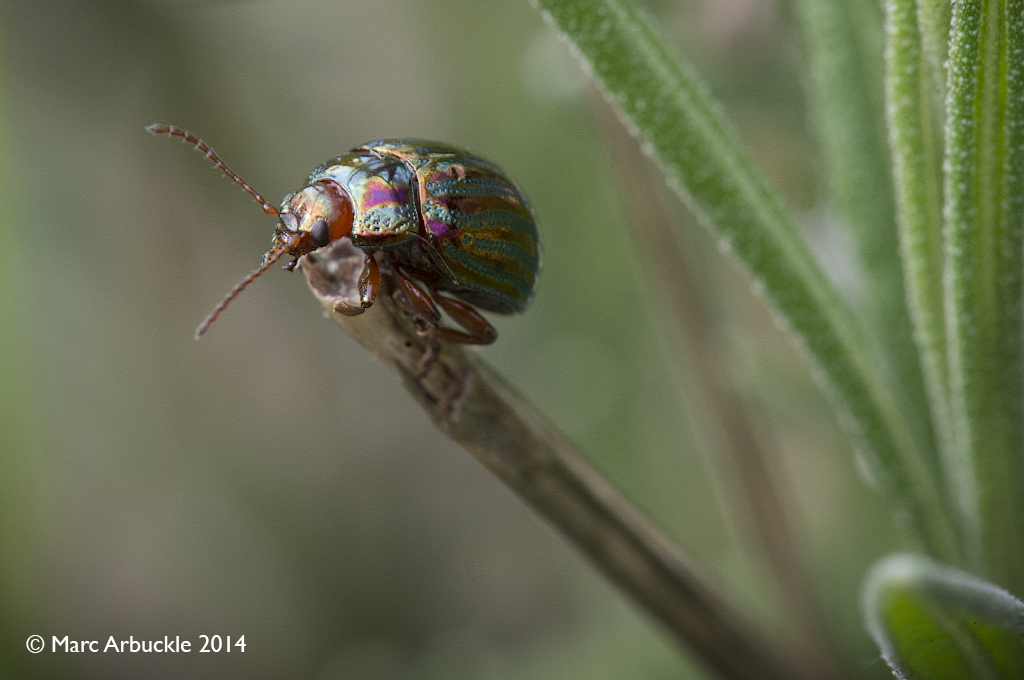
Rosemary Beetle, Chrysolina americana

Chrysolina americana

Twenty years ago you would be lucky to see this attractive metallic green and purple-striped beetle outside a greenhouse. The Rosemary Beetle Chrysolina americana was first discovered living outdoors in Surrey in 1994. Since then it has become widespread throughout southern England. They are commonly found on aromatic herbs, mainly rosemary but also on lavender, sage and thyme.

This one was found on rosemary whilst I was attending a course on bumblebees in Winchester, Hampshire.

Stamped to pieces

Male Brimstone butterfly, Gonepteryx rhamni

Gonepteryx rhamni – Male

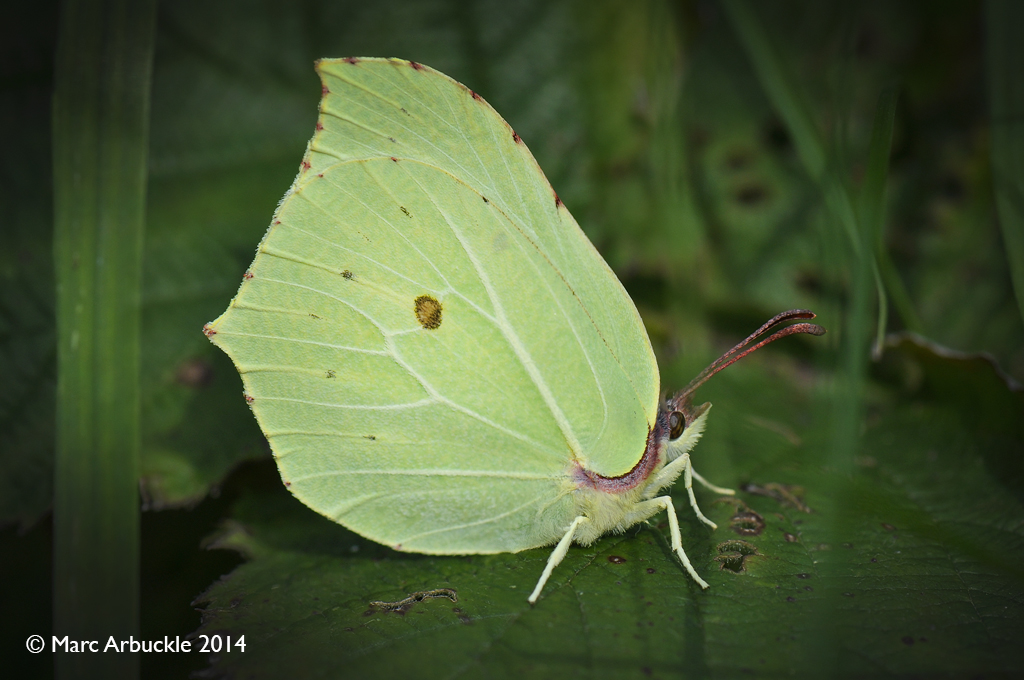
The Brimstone Gonepteryx rhamni is one of our longest-lived butterflies. Adults emerging in July that have successfully over-wintered can still be on the wing the following July, 12 months later. Males like the one pictured above usually awake from hibernation first, typically in the first warm, sunny days of March, a couple of weeks before the females. So if you spot a yellow butterfly at the moment, it’ll be a Brimstone.

The sulphur yellow males are thought to be the original ‘butter-coloured fly’ and thus the source of the word ‘butter-fly’. The less conspicuous female is a much paler greenish-white in comparison. On the upperside, both sexes carry a distinctive single orange spot in the centre of each upper and lower wing, but these are tricky to see in flight. And this is a butterfly that never settles or feeds with its wings open. In fact on a dull day when perched amongst foliage, the veined and leaf-like scalloped wings blend with the leaves so convincingly that this can be an extremely hard insect to spot. Until that is it suddenly materialises in front of you like a splash of sunshine.

This butterfly was the subject of one of the earliest hoaxes. Shortly before his death in 1702, an English butterfly collector, William Charlton, sent a male Brimstone, hand-painted with additional black spots and blue moons on the lower wings, to the esteemed entomologist James Petiver. In 1763, none other than the great Carl Linnaeus declared it a new species Papilio eclipses and included it in the 12th edition (1767) of his Systema Naturae. Thirty years later, in 1793, the Danish entomologist, John Christian Fabricius, examined it more closely and realised it was a fake.

Allegedly, when the hoax was uncovered, the Keeper of National Curiosities at the British Museum was so annoyed he ‘indignantly stamped the specimen to pieces’. So the two specimens in the collection of the Linnean Society in London may actually be later replicas. Fake fakes if you will.
Common Wasp

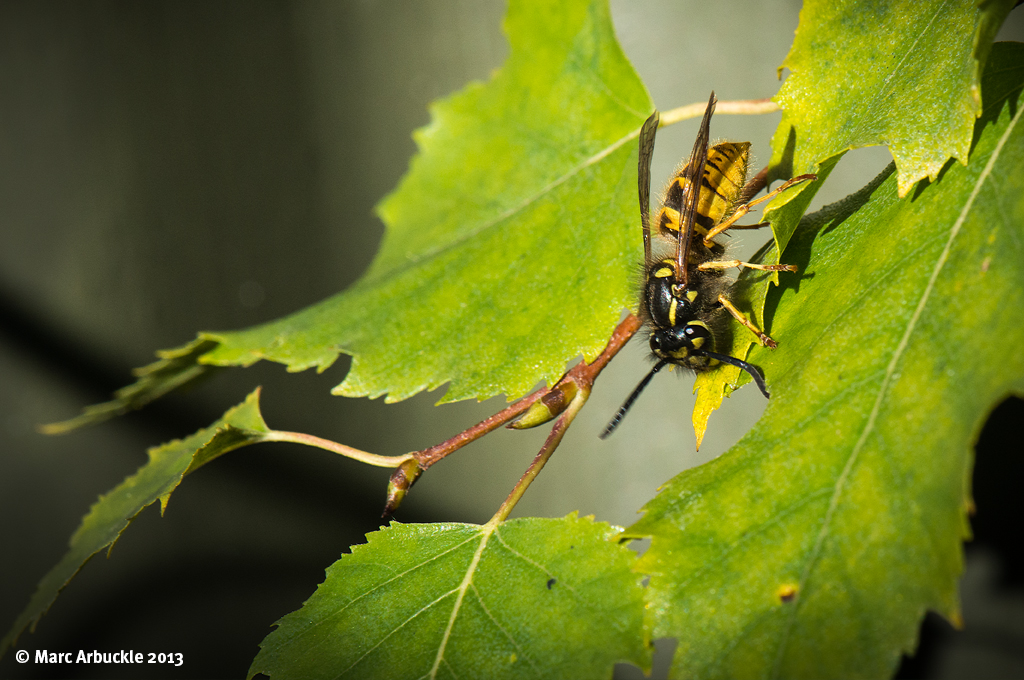
Common Wasp – Vespula vulgaris

Vespula vulgaris

I togged this Common Wasp Vespula vulgaris in the garden when it paused for a moment to soak up some November sun after enjoying the never to ripen pinot noir on my grape vine. Now here’s an insect with attitude. Mess with these guys and they will sting you multiple times. But rarely without reason.

I realise they can be rather irritating if you are enjoying a pint in a beer garden or al fresco dining on a warm summers day. But they are usually harmless unless you absentmindedly drink one or allow one to crawl down past the gold medallion glinting from the depths of your far too open-neck shirt and then start leaping about like the late Ian Curtis of Joy Division. Obviously I’m making allowances for the innocent, babies, small children and those who suffer from adverse reactions to stings. Anaphylactic shock is no laughing matter. But nothing amuses me more than seeing a grown man or woman running around and screaming like a jessie convinced he or she is being chased by a wasp. As if. Wasps are far too cool.

Read more

Jasper

Wasp Beetle Clytus arietis

Clytus arietis

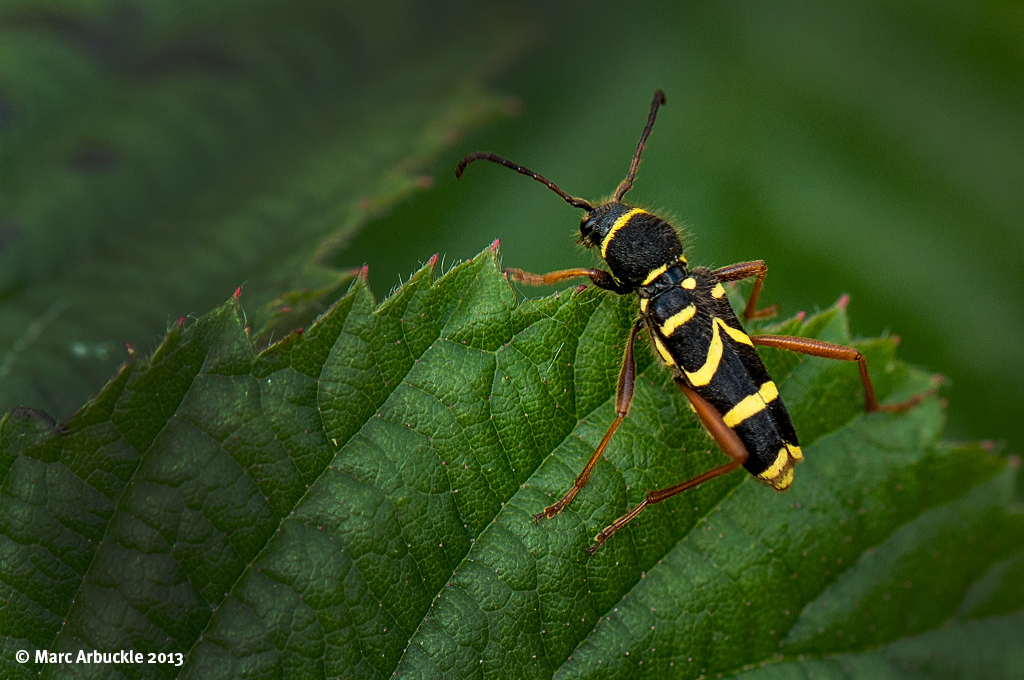
Here’s an interesting beetle I found at Langford Lakes back in May. The Wasp Beetle Clytus arietis is one of the longhorn flower beetles and a convincing wasp-mimic. Both the protective yellow and black colouration and its wasp-like movements give it some protection from predatory birds. If you see it quickly scuttling over vegetation looking for flowers full of nectar and pollen, where it often imitates the distinctive sideways walk of the wasp, it’s not surprising if at first glance this fast-moving insect is mistaken for a jasper.

Read more

Spiced orange

Comma Butterfly – Polygonia c-album (Female)

Polygonia c-album

This wet and cold weather will soon kill off the remainder of our summer insects, but quite a few of our butterflies will survive by hibernating. These include the Brimstone, Comma, Peacock, Small Tortoiseshell and to a lesser extent the Red Admiral (as the majority of these will migrate south back to the continent).

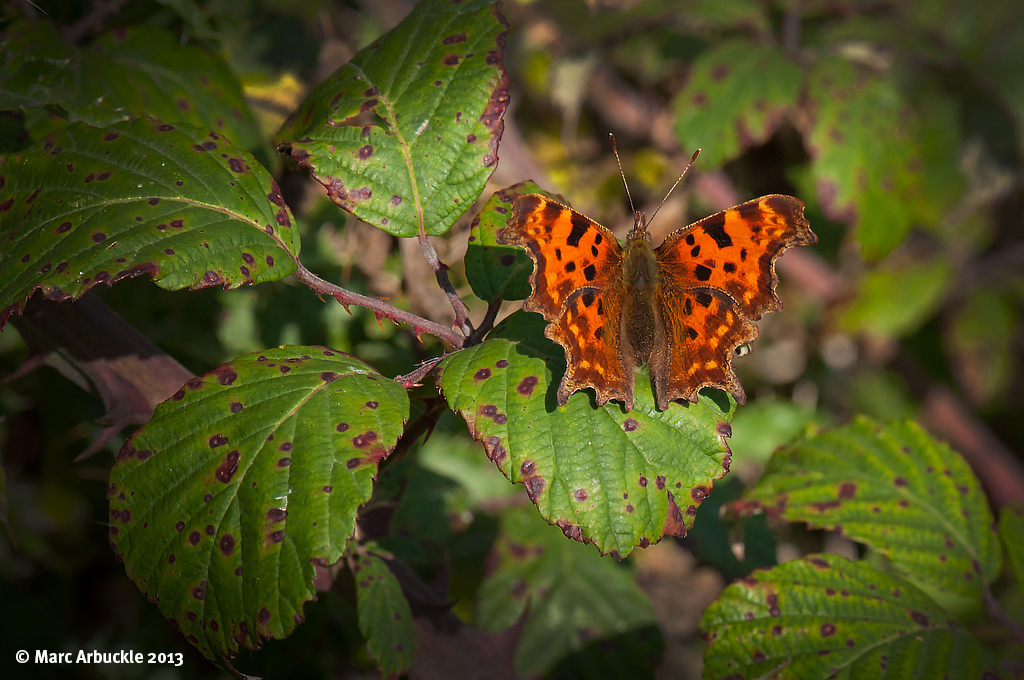
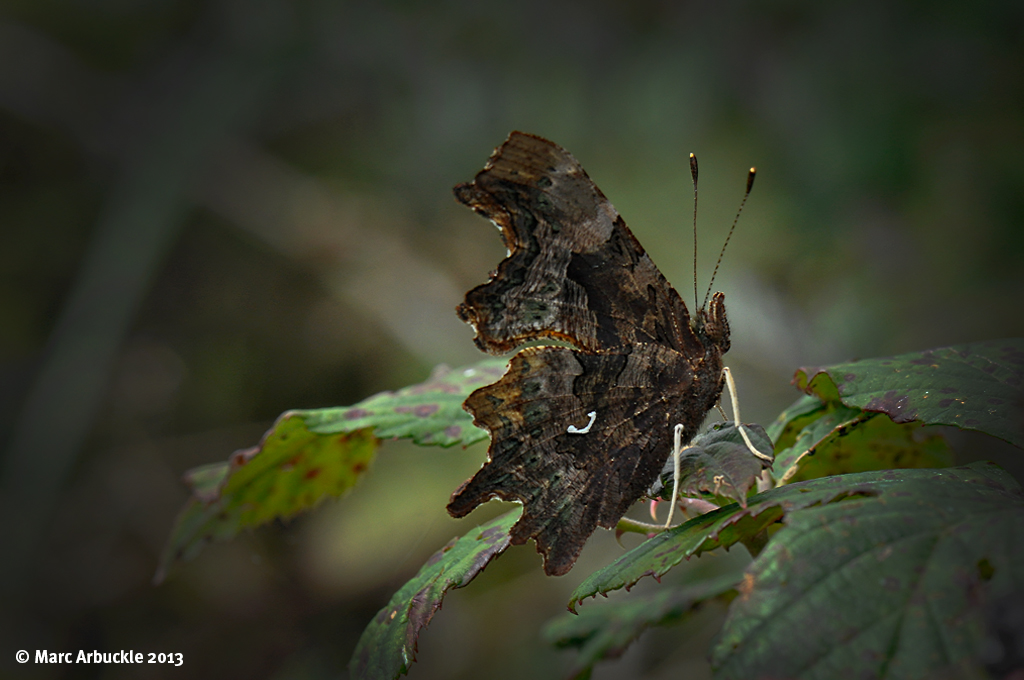
However, the business of finding a suitable spot and settling down for winter is a gradual process. So it is still possible to see a few butterflies on a sunny autumn day, particularly if you scan a good patch of bramble. My current favourites are the pristine, late-emerged specimens of the Comma Polygonia c-album. Basking in the sun with their wings wide-open these raggedy-edged, spiced-orange beauties really do stand out against the dark green leaves. But when, as in the photo below, they have their wings folded, they can be slightly harder to spot.

But that’s a good thing as it is this dark cryptic camouflage and irregular outline that will help keep them safe amongst the dry leaves of winter. Hiding them from the prying eyes of hungry birds and spiders.

Note the characteristic white mark or ‘comma’ on its rear underwing which gives this butterfly its common name. Personally I think it looks more like a squashed ‘v’ but let’s not get into an argument over aurelian typography.

If it survives the winter then it can be one of the first butterflies on the wing next year with sightings as early as January. And I for one will be glad to see it.

Comma butterfly with wings closed – Polygonia c-album (Female

Polygonia c-album

Wasp spider

wasp spider – argiope bruennichi – female

Argiope bruennichi – Female

I’m fascinated by insects but spiders give me the willies. I found this strikingly coloured example a couple of weeks back while practicing my grasshopper identification skills in Winchester, Hampshire. It’s a female Wasp Spider Argiope bruennichi which is a species of orb spider.

Initially believed to be a Mediterranean species it has been recorded in small numbers on the south coast since the early 1920s. However, it has started to spread slowly northwards and has recently been found at Lakenheath Fen in Norfolk. Here in Wiltshire it was first recorded in 1999 but is still a relative rarity as it only becomes established where long grass is not regularly managed. To survive wasp spiders need warm summers and mild winters, so with global warming they may become a far more common sight.

Be warned though, although non-poisonous if mishandled she can bite and her fangs are certainly strong enough to pierce human skin.

Read more