Skip to content

Separating the pearls

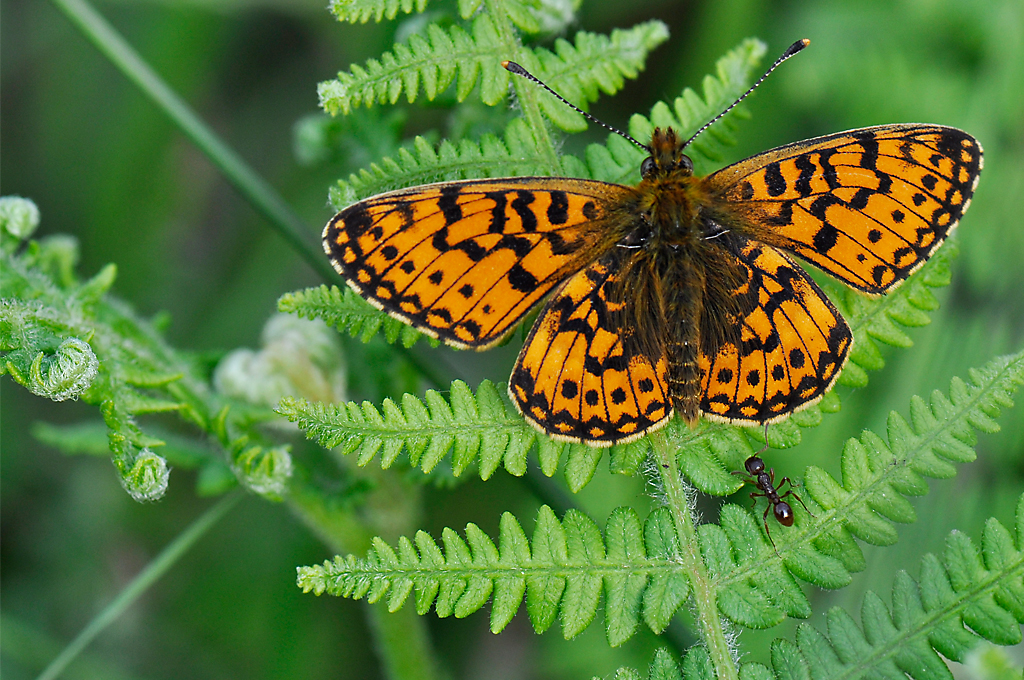
Small Pearl-bordered Fritillary

Boloria selente – Male

When I went to Bentley Wood a week or so ago now looking for a butterfly I’d never seen before I wasn’t quite sure what to expect or even where I’d find it. I was looking for the Pearl-bordered Fritillary Boloria euphrosyne but it was further complicated by the fact that the Small Pearl-bordered Fritillary Boloria selente was to be found there too and I’d never seen that before either. As it happened both were flying at the same time and to a novice like me both looked very similar. On my first visit I’d definitely spotted and photographed one of them, but which one? Read more

Searching for the duke

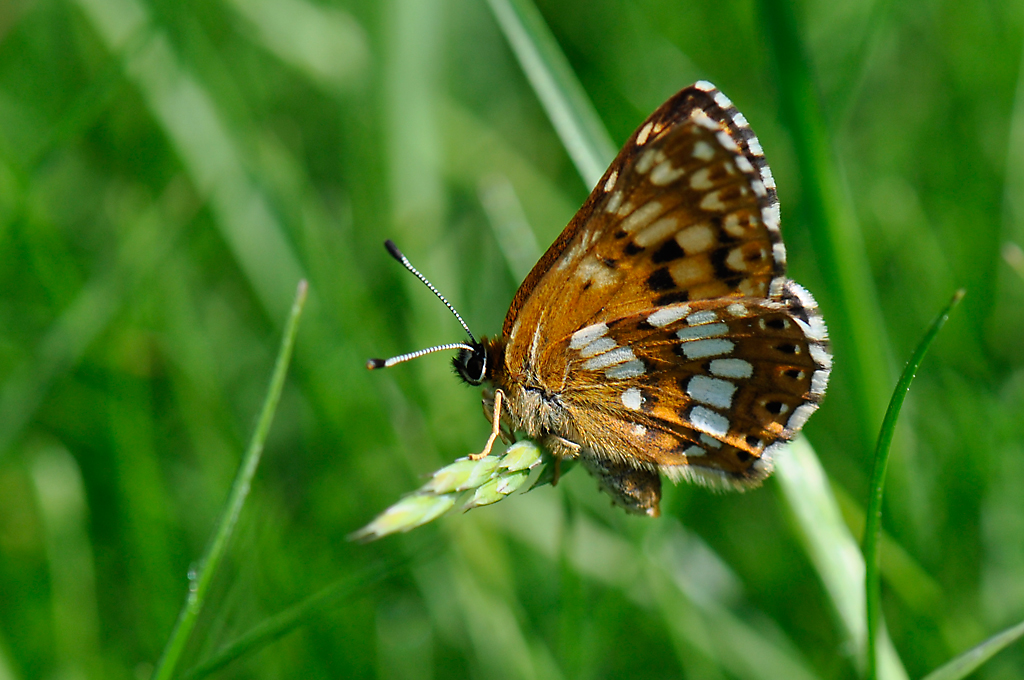
Duke of Burgundy butterfly - Side view

Hamearis lucina – Side view

Last April I saw my first ever Duke of Burgundy Hamearis lucina, or at least I’m pretty sure I did. To be fair all I saw was a fleeting flash of brown and orange. But then I was in the right place, ancient chalk downland, at roughly the right time, so I was reasonably confident, even for a novice.

Just over a year later, armed with two weeks’ leave and a new macro lens I was determined to do better. I’d read that the adults prefer mornings so I was out of bed and up on Morgans Hill before the dew had evaporated. My only concern was that the very wet April we’d just endured may have proved too much for them. With so few seen last year I was beginning to fear the worst. Read more

Seeking the sun worshipper

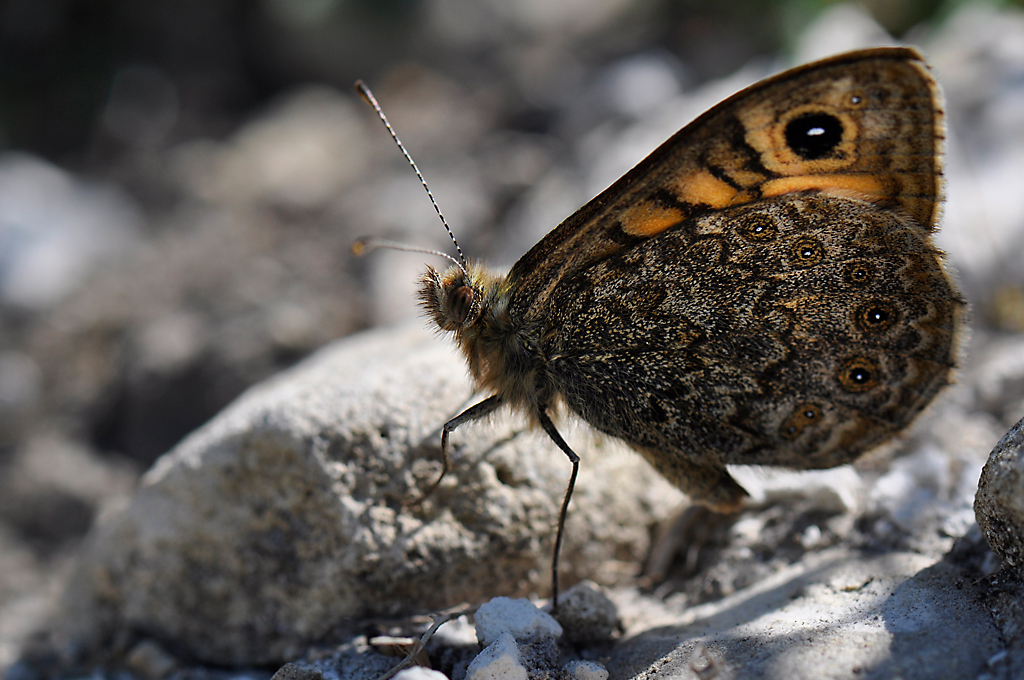
Wall Brown

Lasiommata megera

The Wall Lasiommata megera loves hot, sun-baked, dry ground and gets its name from its habit of basking on walls. So when I went looking for it up on Morgans Hill I headed straight for the chalk quarry in section 15 where I’d seen one late last year. On the way to the gate I noticed a patch of bare ground to the left of me, just in front of the fenced off juniper bushes and almost immediately a flicker of brown dropped down onto it. Was it really going to be this easy? I walked over slowly, spooking myself and a grazing rabbit as I got closer. Yep, it was a Wall, tricky to spot at first as it had its wings folded rather than outspread in classic sunbathing pose. As soon as it saw me though it danced off down the hill but then doubled back and landed again. It repeated this pattern several times as I attempted to get a photograph, obviously keen to defend its territory, so I lay down on the grass and simply waited for it to return.

Although it did briefly open its wings on landing it always closed them again before I had time to focus, so I opted for this side view. The undersides of butterflies are often overlooked but as you can see they can be equally impressive.

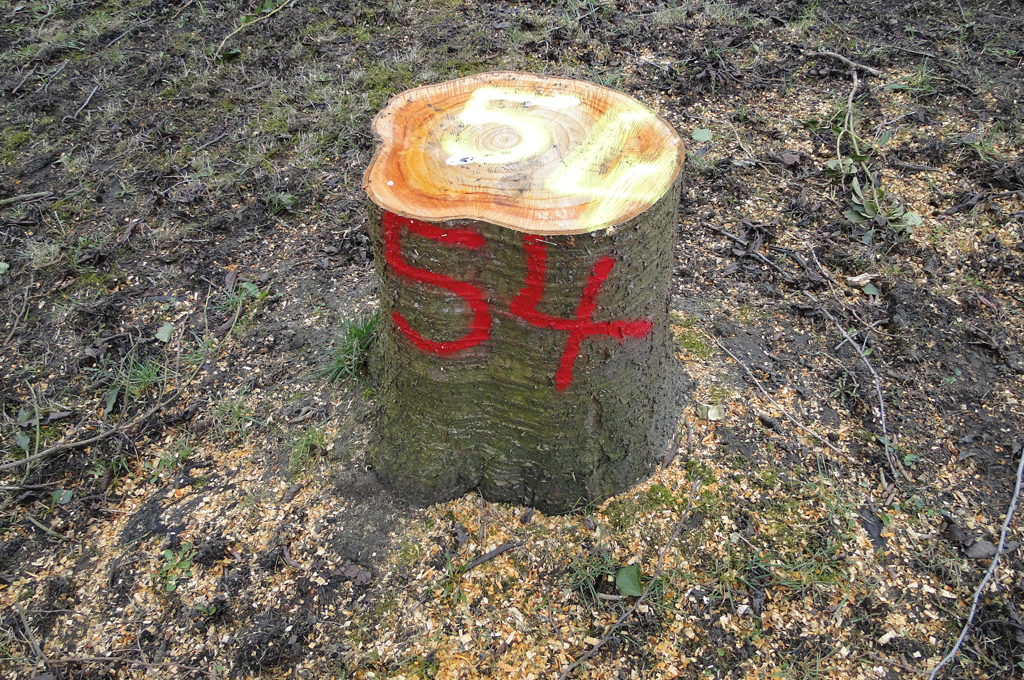
Rest in peace number 54

RIP number 54

This is the third year I’ve attended Paul Darby’s excellent Identifying Trees in Winter course at Ravensroost Wood and thankfully this time the weather was more kind to us. A male buzzard was clearly enjoying the sunshine, wheeling up into the clear blue to put on a spirited if early mating display. Gazing through yellow catkins we did our best to see if buds on twigs were opposite or alternate, whether the texture of bark was smooth or fissured, whilst the keener amongst us scrawled down notes or made quick sketches as an aide-mémoire. All this accompanied by a proper woodland soundtrack of nuthatch, coal tit, song thrush, spotted woodpecker and a tawny owl still up from a night terrorising voles. There were one or two trees I couldn’t identify, Wych Elm and Goat Willow, but overall I was pleased I had remembered far more than I had forgotten. Read more

Wedding bells and hallucinogenics

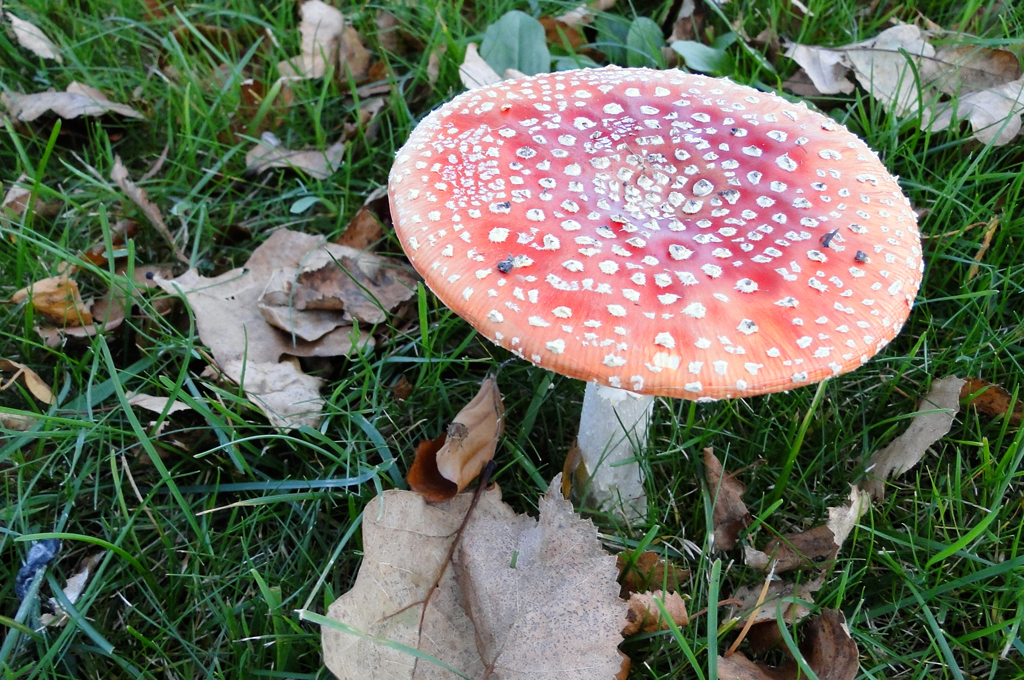
Fly Agaric

Amanita muscaria

My former graphic assistant, David Williams, got married today. Whilst sipping champagne I spotted this little beauty from the window of the hotel where the reception was being held. It’s a bright red and white-spotted fungi called Fly Agaric Amanita muscaria often found growing near Silver Birch. Although poisonous, deaths are actually pretty rare so let’s not get hysterical. In fact it’s actually more of a hallucinogenic as it contains the alkaloid muscimol. Not that I tried it, note no bite marks, plus the mix of champagne and beer did for me.

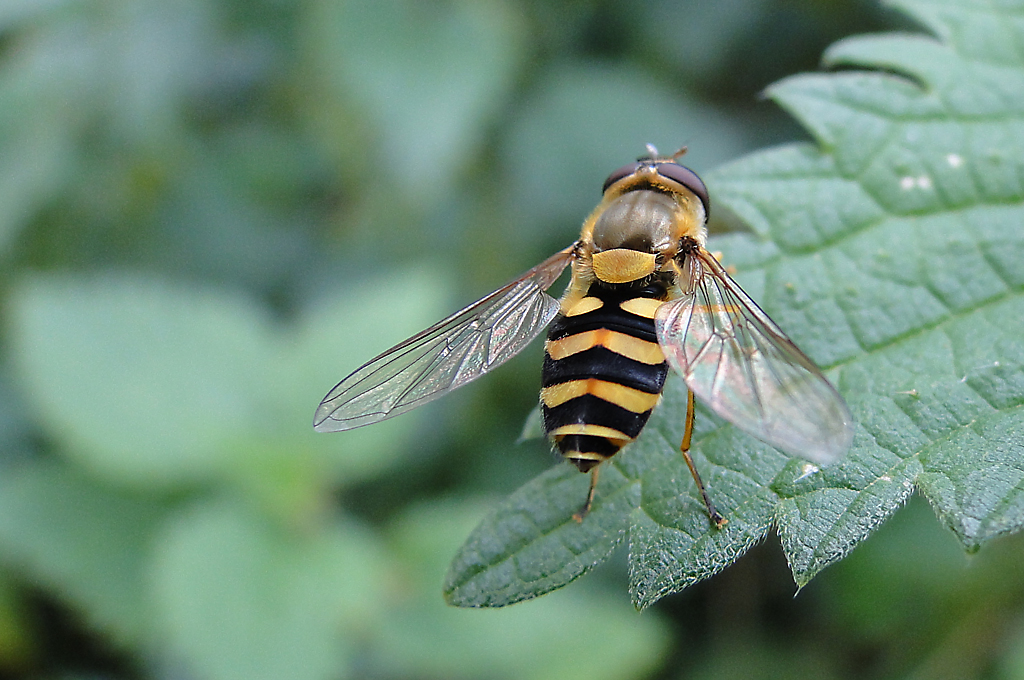
Hover-fly

Hover Fly

Syrphus ribesii

Some insects are more accommodating than others when it comes to taking photographs. Not only are some species easier to photograph but actual individuals can vary. Some are off as soon as they catch sight of you whilst others will quite happily sit there until you accidentally nudge them with the lens. Some I swear ask for a make-up artist. Take this little Hover-fly for example which I believe is Syrphus ribesii. Although it did fly off quite a few times, fortunately it only went as far as the next bush. It often depends how warm it is. In my experience the hotter it gets, the harder it gets. I’ve found that for macro photography a warmish overcast day is best. Read more

Glass envy

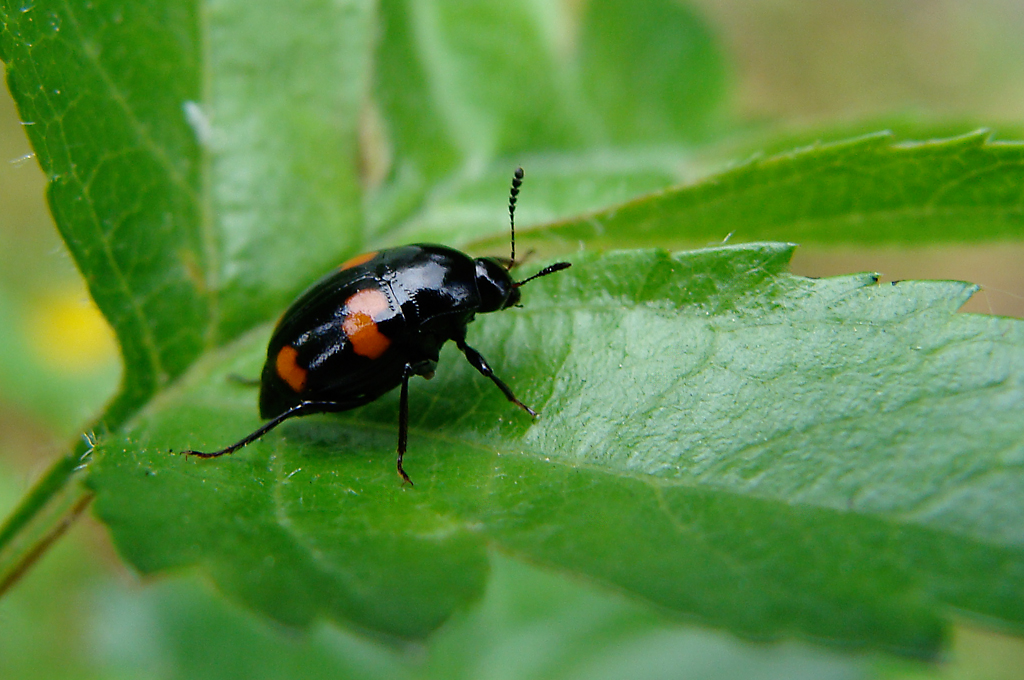
Shining Fungus Beetle

Scaphidium quadrimaculatum

Although I’ve managed to capture some reasonable macro images like this one of a tiny Shining Fungus Beetle Scaphidium quadrimaculatum using a bridge camera as they are called (initially a Sony Cyber-shot H10 and more recently a HX1), I have to be honest and say it’s been more to do with luck than skill.

Even the very best of my macro images are not in the same league as those taken with proper macro lenses. It’s all to do with the quality of the lens or ‘glass’ as photographers like to call it. Of course I do work at it but as my HX1 has no manual focus I’m rather at the mercy of what it decides it’s going to autofocus on. With macro photography focus and sharpness is what it’s all about and with the majority of insects it makes sense for the point of focus to be the head or eyes. The only way I can work around this is to take lots of shots and just hope I get lucky. Sometimes I do but it can be a bit disappointing when I’ve come across something really unusual or particularly interesting only to find out later that the images are all just slightly out of focus.

So earlier this year I moved up to a Nikon DSLR but sadly that’s only half the battle, as to do the business it needs to be paired with a proper macro lens. I’ve got my eye on the Micro-Nikkor 105mm f2.8 but there’s just the small matter of the £600+ price tag which is more than I paid for the camera. Oh and adding a dedicated Speedlight macro flash unit will add another £650. Ouch.
Early sunbather

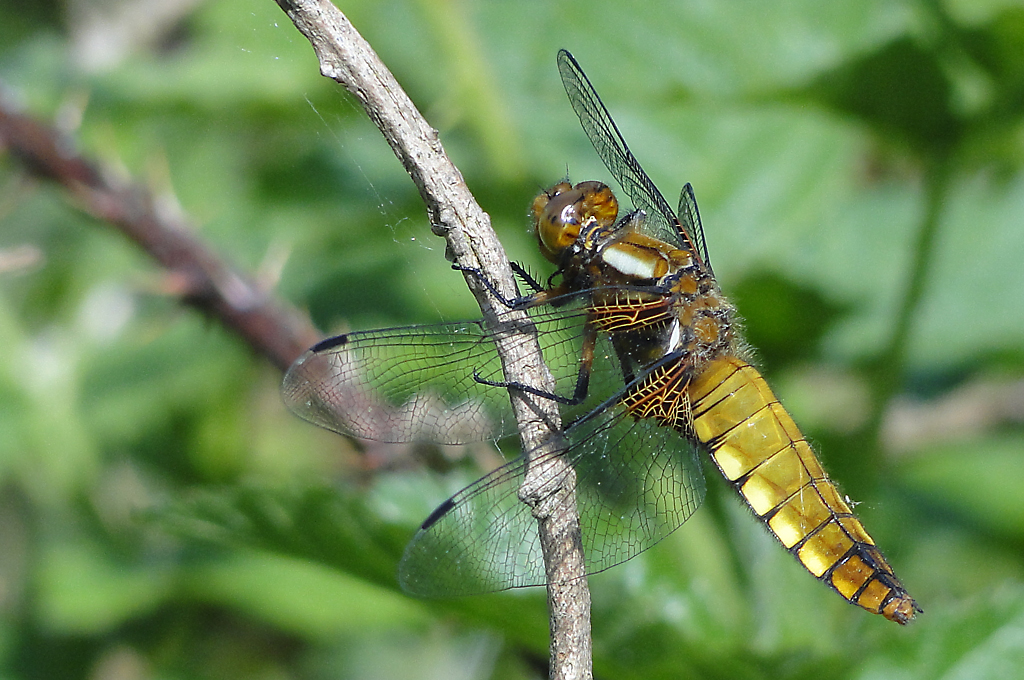
Broad-bodied Chaser Dragonfly

Libellula depressa – Immature male

Whilst surveying T1 the first section of my bumblebee transect at Morgans Hill I came across this little beauty soaking up the sun amongst the brambles. It’s a freshly emerged male Broad-bodied Chaser dragonfly Libellulla depressa. In its immature colouring it almost has the look of a giant wasp or hornet but it’ll soon transform into its adult blue colouring. He’s a little early this year, no doubt spurred on by the fabulously warm spring weather.

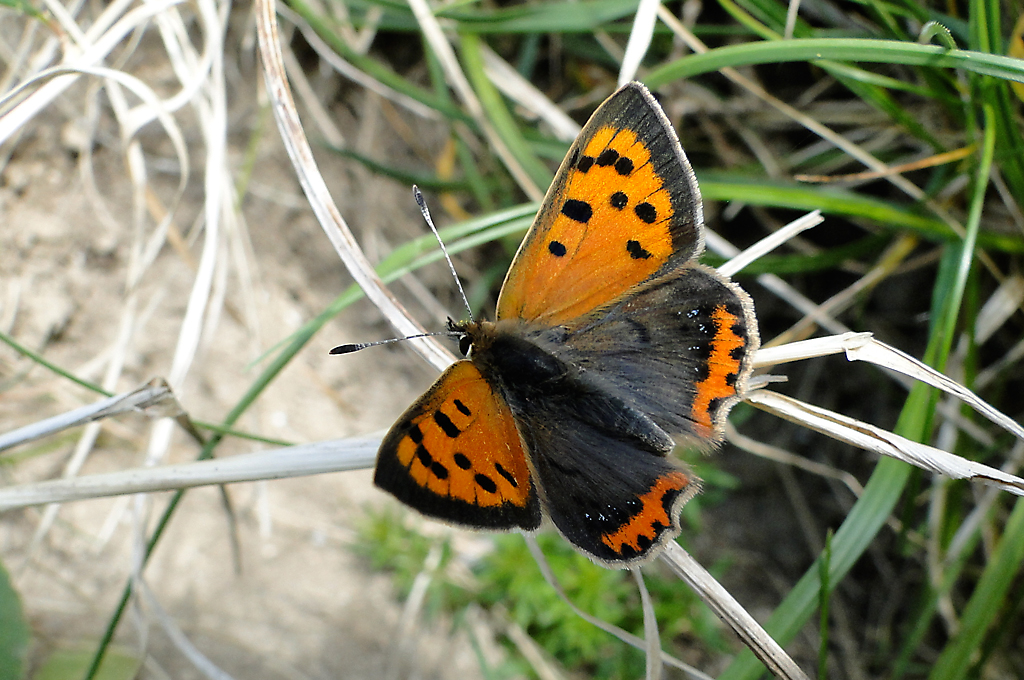
Small Copper

Small Copper Butterfly

Lycaena phlaeas – Male

As if I haven’t got enough to do I’ve now volunteered to do a butterfly survey each time I complete my monthly bumblebee survey at Morgans Hill. In truth it isn’t that much more work and as generally there are more butterflies than bumblebees it’ll make it more interesting. I’m not anywhere near as good at identifying butterflies as I’d like to be so I’m really looking forward to improving my knowledge. I’m ok with the more common ones but not quite so good with the rarer types.Above is a bit of a favourite of mine, the rather quarrelsome Small Copper Lycaena phlaeas. You might just about be able to pick out some faint blue speckled markings on the hind wings. When this makes a clearer line of blue dots this form is called caeruleopunctata. There is even a rare white and black albino form.

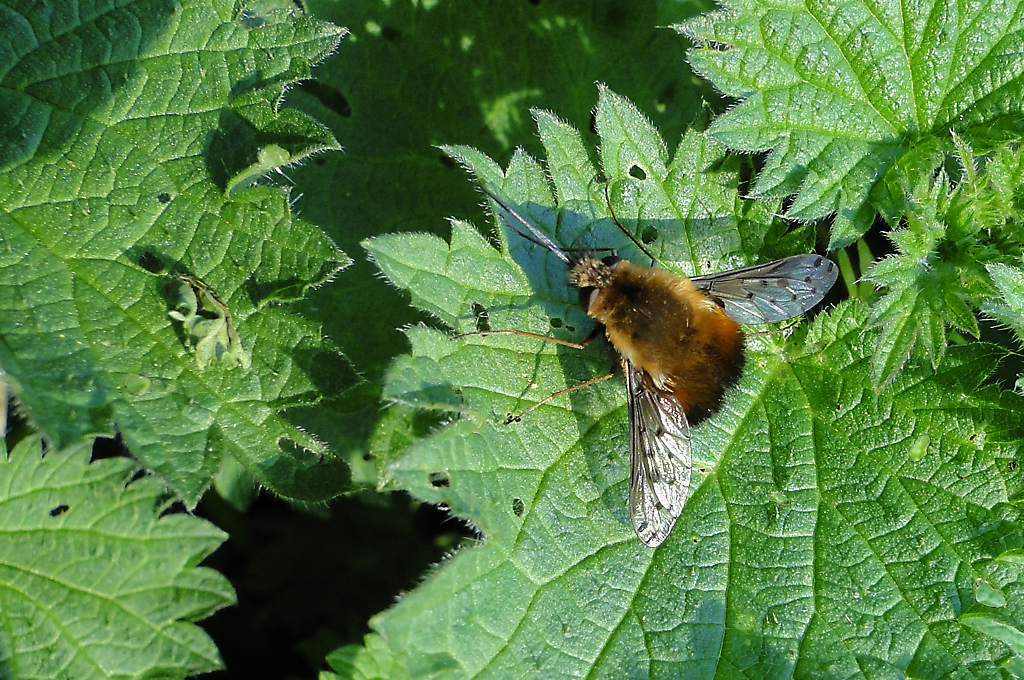
Dotted Bee-fly

Dotted Bee-fly

Bombylius discolor

Whilst out looking for bumblebees I occasionally come across something more unusual like this little chap. It’s one of the Bee-flies, the more common of which is the Large Bee-fly Bombylius major which sometimes visits gardens. This is the much scarcer Dotted Bee-Fly Bombylius discolor. It’s almost mouse-like with its furry coat and fairy dotted wings but look at that vicious-looking spike coming out of its mouth. What’s that all about? Don’t worry it’s not something to sting you with. It’s just its proboscis which it uses to suck nectar. It’s not exactly harmless though as it’s parasitoid larvae attack the grubs of solitary bees and wasps in their underground nests. It’s thought to prey primarily on the larvae of the Grey or Ash Mining Bee Andrena cineraria. Cute though isn’t it?