Skip to content

Posts from the ‘Butterflies’ Category

Pearly king

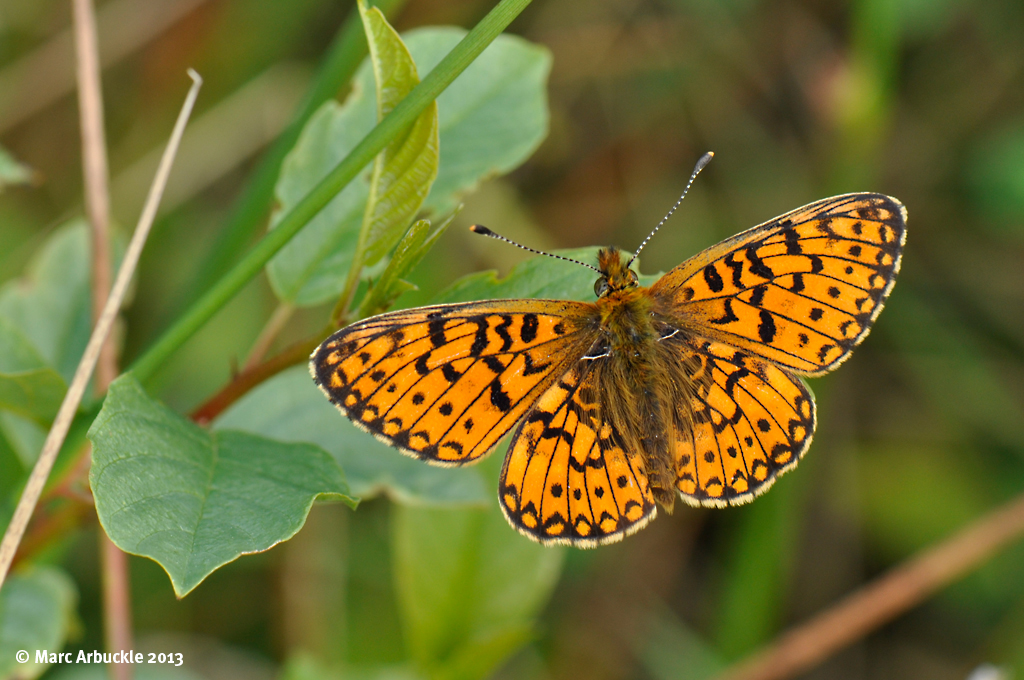
Small Pearl-bordered Fritillary – Bolaria selene

Bolaria selene – Male

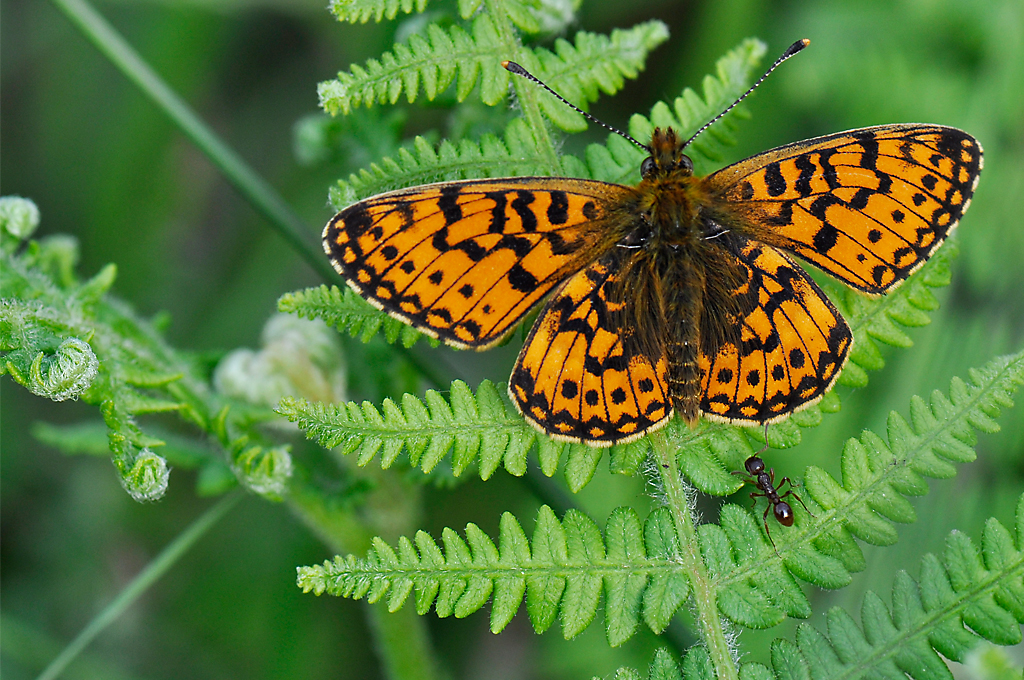
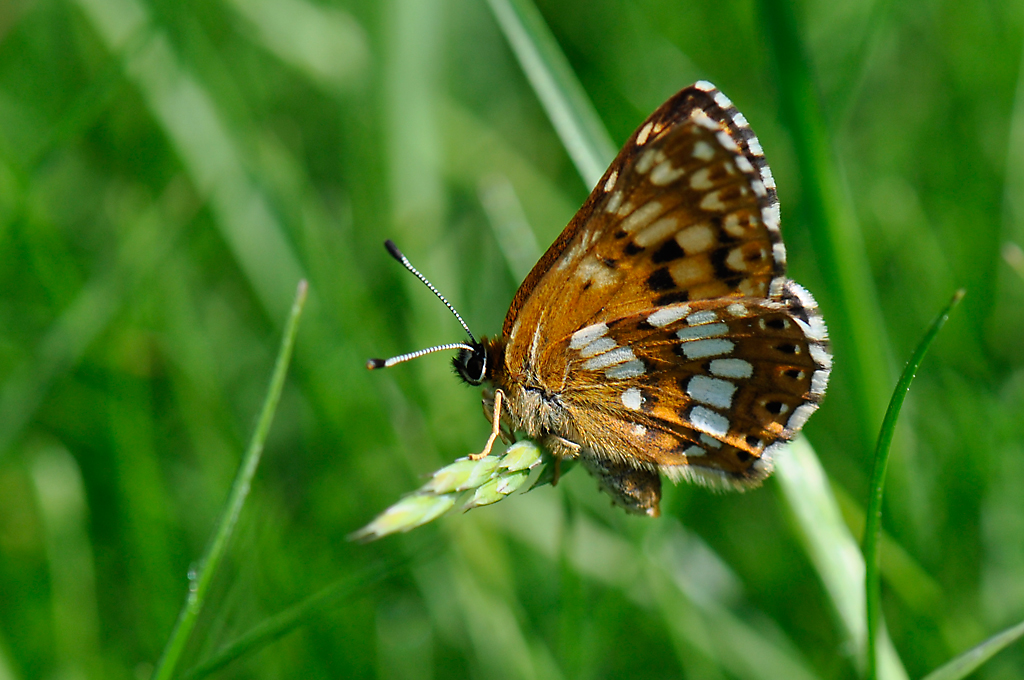
This little orange firecracker is a Small Pearl-bordered Fritillary Boloria selene, a male I believe, photographed on the 9th June at Bentley Wood. This was one of the first butterflies I photographed last May when I got my macro lens and I can’t tell you how much I was looking forward to viewing the results. Particularly as this was a new species for me. What a disappointment then to discover the vast majority were either blurred or just slightly out of focus. To be fair I did manage to get a few decent shots, one of which was shortlisted for the Wiltshire Wildlife Trust’s 50th anniversary photographic competition, but believe me that was more down to luck than judgement.  Read more
Eastern Baton Blue

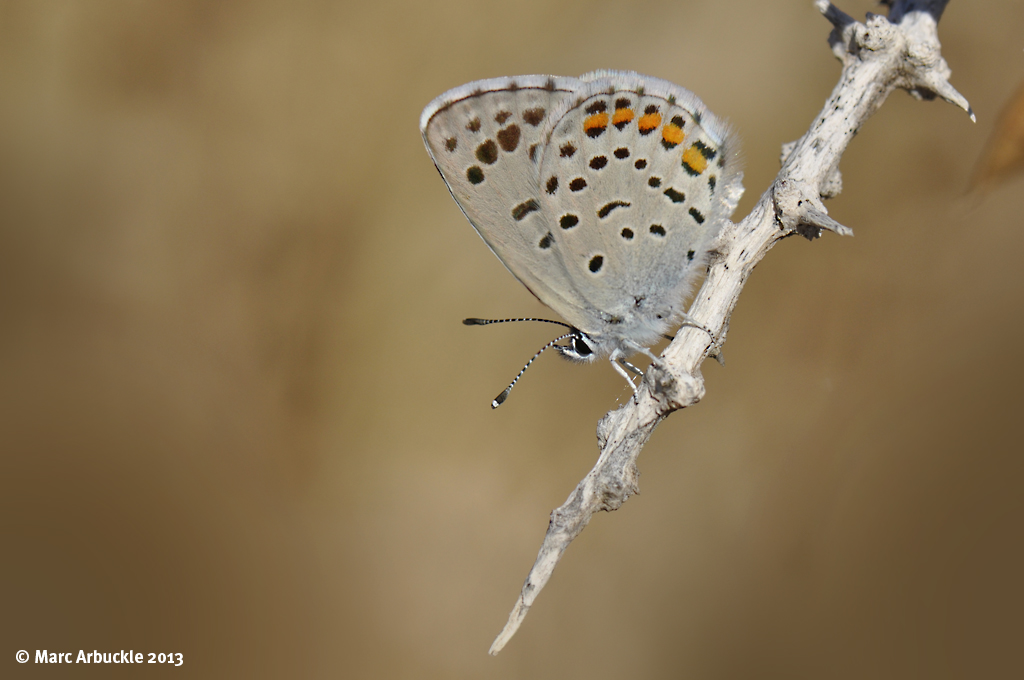
Eastern Baton Blue butterfly – Pseudophilotes vicrama

Pseudophilotes vicrama

My recent trip to Cyprus was a little disappointing. Although I did get to see many hundreds of butterflies they proved remarkably difficult to photograph. For starters it was way hotter than expected, peaking at around 37 degrees. It was clear I’d misjudged the timing by 2 weeks to a month – the majority of the wildflowers were burnt to a crisp.
Read more

Small Blue – our smallest butterfly

Cupido minimus – Male

Cupido minimus – Male

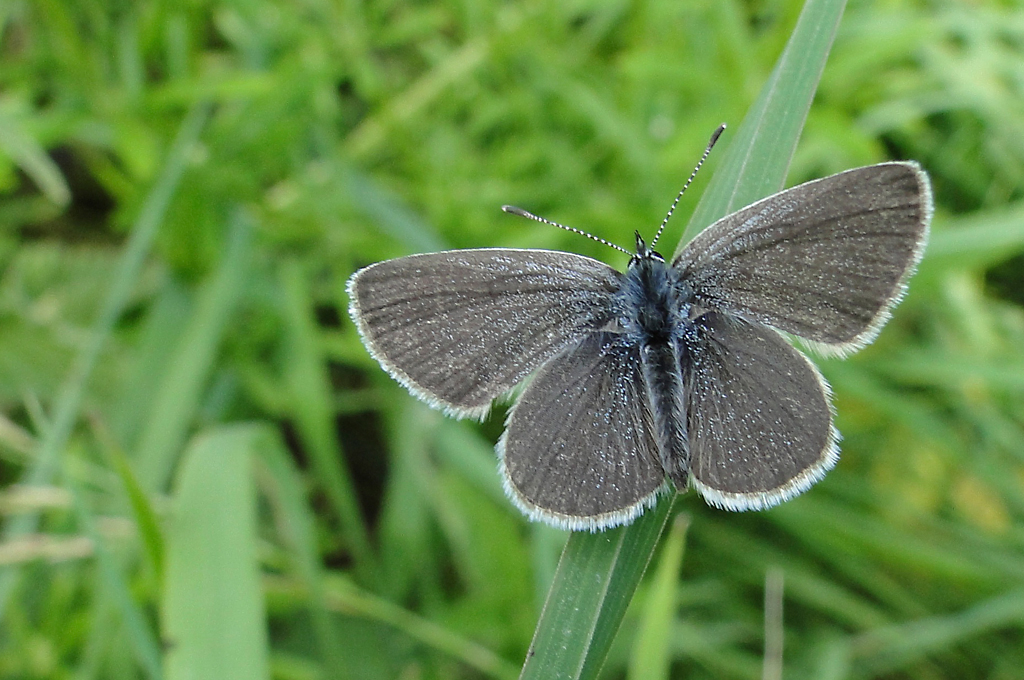
When I saw my first Small Blue Cupido minimus I was surprised at just how tiny it is. The wingspan of our smallest butterfly can be as little as 16mm, so it’s well named. It’s rare though, being no more than locally common even in its strongholds of Gloucestershire, Wiltshire, Dorset and the Isle of Wight. Here in Wiltshire up on Morgan’s Hill I’ve only come across it in one sheltered spot and even there it’s largely confined to the base of one steep bank. Read more

A female comma

Comma Butterfly – Polygonia c-album (Female)

Polygonia c-album – Female

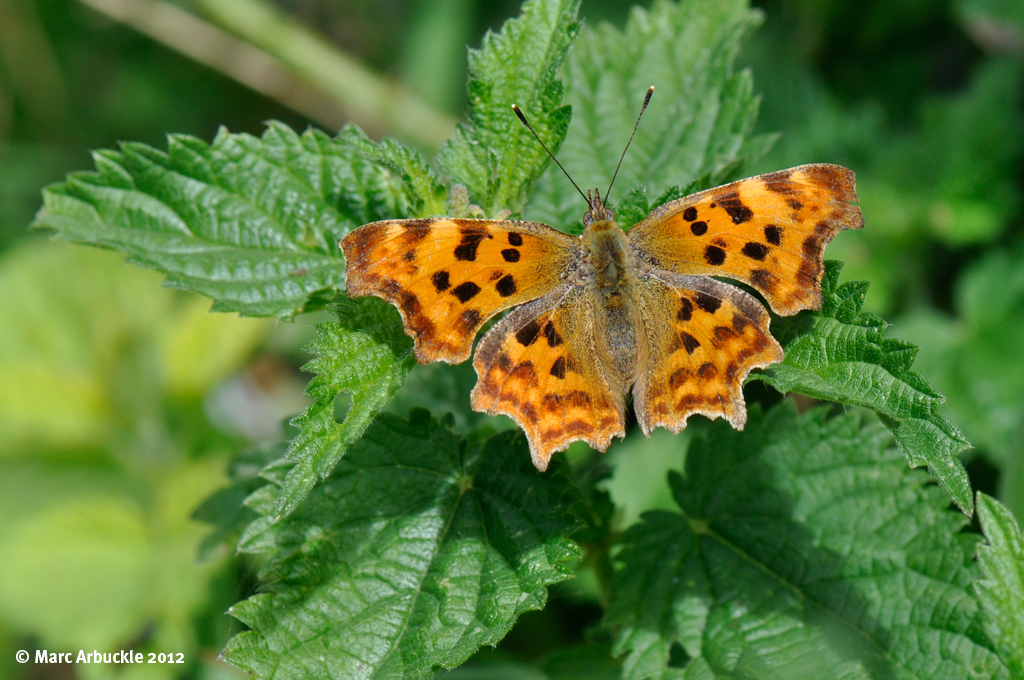
The Comma Polygonia c-album is one of the earliest butterflies you might encounter each spring. I saw my first this year on the 25th March. Generally I’m sad to say that for many butterfly species numbers are in decline and this extremely wet summer really hasn’t helped. However, the Comma is one of our few butterfly success stories. Just over a century ago it was on the verge of extinction in Britain with fewer than half a dozen records in many southern counties. Then, just after the First World War it started to recover again. No one is really sure why it declined or why it has recovered but since the 1950s it has expanded its range rapidly making this raggedy-winged butterfly an increasingly common sight again, even in gardens. Read more

Marbled White

Marble White Butterfly

Melnargia galathea – Female

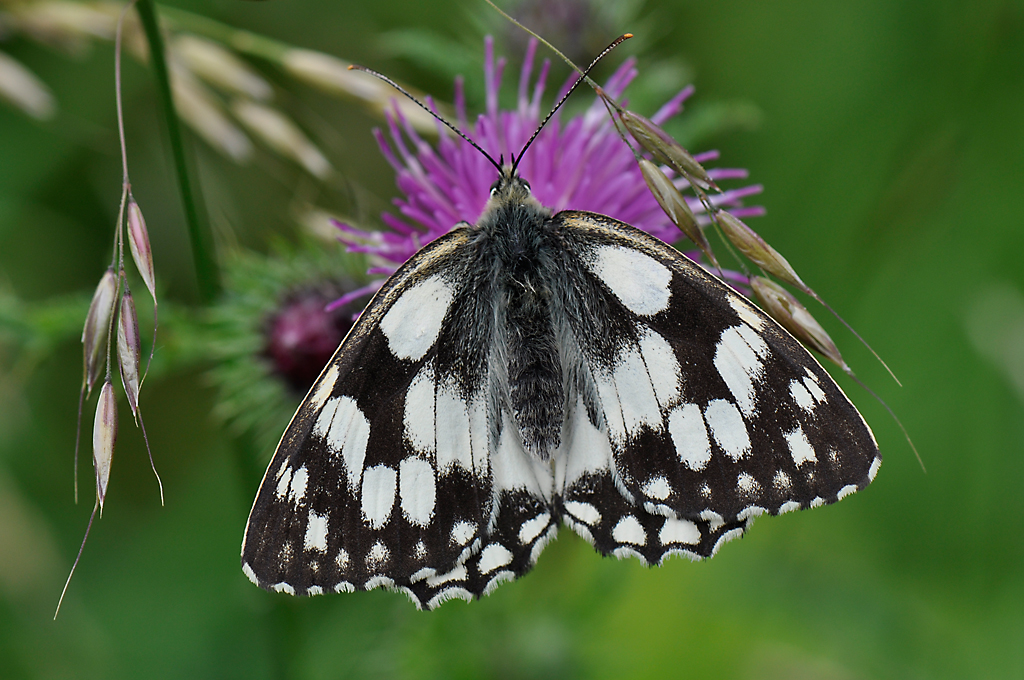
This morning I reluctantly trudged through the mud down to Jones’s Mill nature reserve to do my monthly Riverfly survey. To be honest I’m not always in the mood for it and sometimes would rather be doing something else, like laying in bed. It can get a bit monotonous in as much as I can pretty much predict the result and quantity of each of the eight species I’ll record. I guess there’s only so many river invertebrates you can count before you start to lose the will to live. Yet the sun was doing it’s best to steam some puddles and as I splashed across Big 40 towards the wood my mood was lifted by the sight of dancing butterflies, a mixture of orange-splashed Meadow Browns and bitter-chocolate Ringlets. To lift my damp spirits further, just as I started my first kick-sample I flushed a metallic blue-green Beautiful Demoiselle damselfly Calopteryx virgo from the reeds. Sadly my camera was in my rucksack. Not a lot of use in there is it? Read more

Separating the pearls

Small Pearl-bordered Fritillary

Boloria selente – Male

When I went to Bentley Wood a week or so ago now looking for a butterfly I’d never seen before I wasn’t quite sure what to expect or even where I’d find it. I was looking for the Pearl-bordered Fritillary Boloria euphrosyne but it was further complicated by the fact that the Small Pearl-bordered Fritillary Boloria selente was to be found there too and I’d never seen that before either. As it happened both were flying at the same time and to a novice like me both looked very similar. On my first visit I’d definitely spotted and photographed one of them, but which one? Read more

Searching for the duke

Duke of Burgundy butterfly - Side view

Hamearis lucina – Side view

Last April I saw my first ever Duke of Burgundy Hamearis lucina, or at least I’m pretty sure I did. To be fair all I saw was a fleeting flash of brown and orange. But then I was in the right place, ancient chalk downland, at roughly the right time, so I was reasonably confident, even for a novice.

Just over a year later, armed with two weeks’ leave and a new macro lens I was determined to do better. I’d read that the adults prefer mornings so I was out of bed and up on Morgans Hill before the dew had evaporated. My only concern was that the very wet April we’d just endured may have proved too much for them. With so few seen last year I was beginning to fear the worst. Read more

Seeking the sun worshipper

Wall Brown

Lasiommata megera

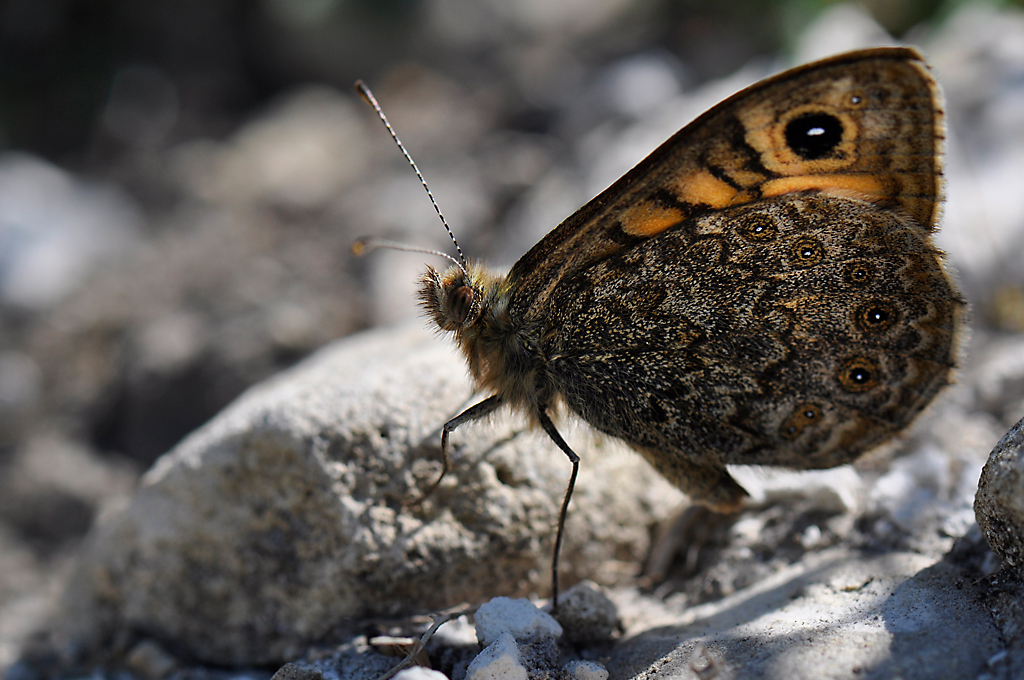
The Wall Lasiommata megera loves hot, sun-baked, dry ground and gets its name from its habit of basking on walls. So when I went looking for it up on Morgans Hill I headed straight for the chalk quarry in section 15 where I’d seen one late last year. On the way to the gate I noticed a patch of bare ground to the left of me, just in front of the fenced off juniper bushes and almost immediately a flicker of brown dropped down onto it. Was it really going to be this easy? I walked over slowly, spooking myself and a grazing rabbit as I got closer. Yep, it was a Wall, tricky to spot at first as it had its wings folded rather than outspread in classic sunbathing pose. As soon as it saw me though it danced off down the hill but then doubled back and landed again. It repeated this pattern several times as I attempted to get a photograph, obviously keen to defend its territory, so I lay down on the grass and simply waited for it to return.

Although it did briefly open its wings on landing it always closed them again before I had time to focus, so I opted for this side view. The undersides of butterflies are often overlooked but as you can see they can be equally impressive.

Rest in peace number 54

RIP number 54

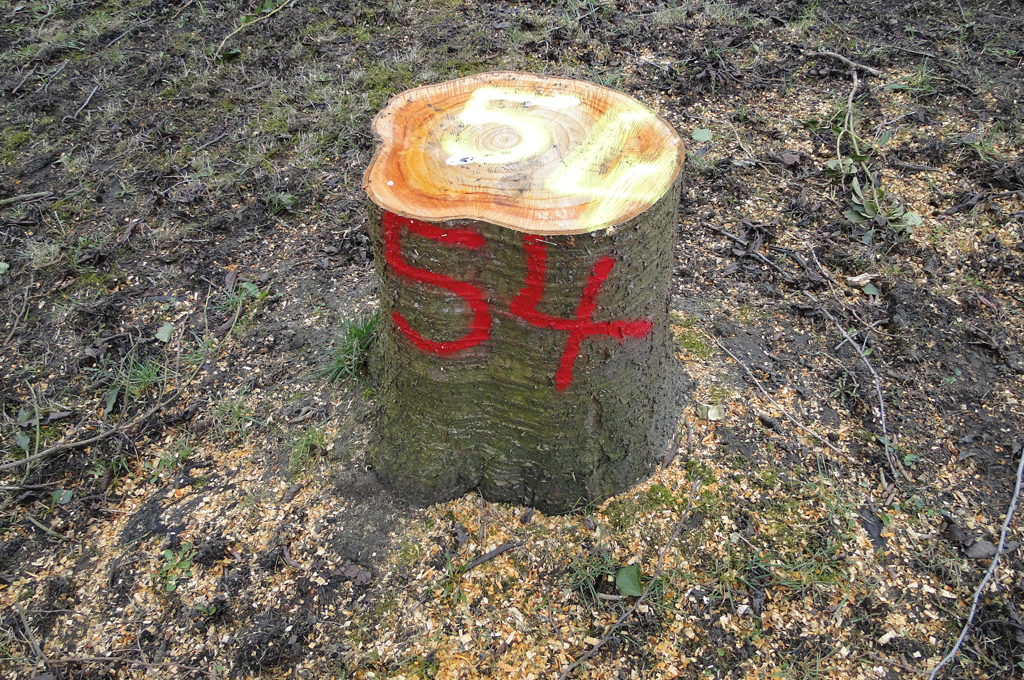
This is the third year I’ve attended Paul Darby’s excellent Identifying Trees in Winter course at Ravensroost Wood and thankfully this time the weather was more kind to us. A male buzzard was clearly enjoying the sunshine, wheeling up into the clear blue to put on a spirited if early mating display. Gazing through yellow catkins we did our best to see if buds on twigs were opposite or alternate, whether the texture of bark was smooth or fissured, whilst the keener amongst us scrawled down notes or made quick sketches as an aide-mémoire. All this accompanied by a proper woodland soundtrack of nuthatch, coal tit, song thrush, spotted woodpecker and a tawny owl still up from a night terrorising voles. There were one or two trees I couldn’t identify, Wych Elm and Goat Willow, but overall I was pleased I had remembered far more than I had forgotten. Read more

Small Copper

Small Copper Butterfly

Lycaena phlaeas – Male

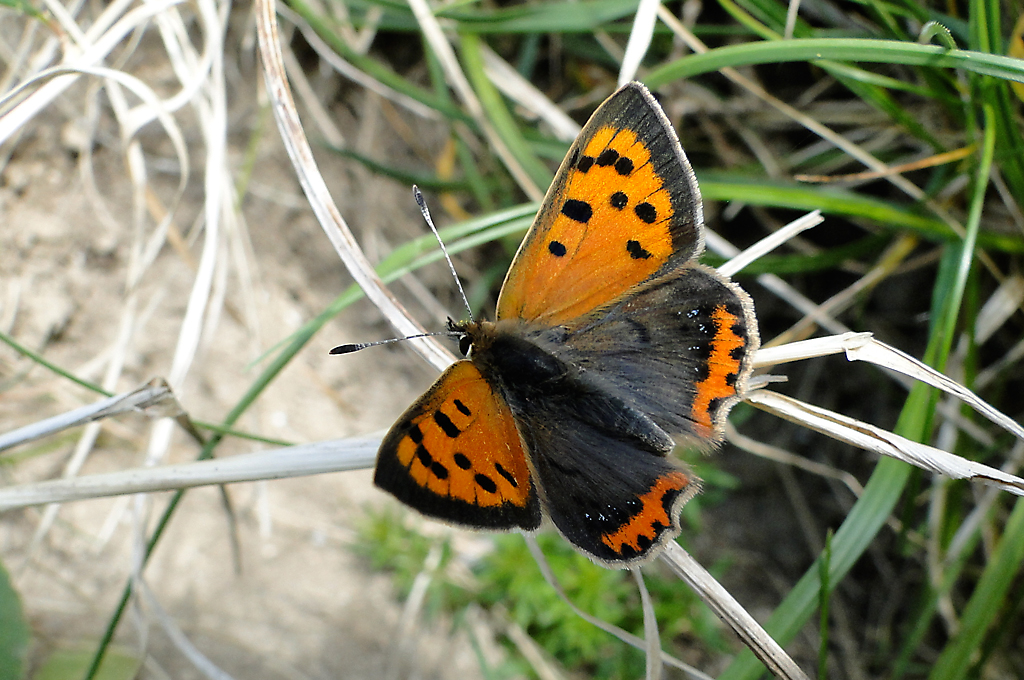
As if I haven’t got enough to do I’ve now volunteered to do a butterfly survey each time I complete my monthly bumblebee survey at Morgans Hill. In truth it isn’t that much more work and as generally there are more butterflies than bumblebees it’ll make it more interesting. I’m not anywhere near as good at identifying butterflies as I’d like to be so I’m really looking forward to improving my knowledge. I’m ok with the more common ones but not quite so good with the rarer types.Above is a bit of a favourite of mine, the rather quarrelsome Small Copper Lycaena phlaeas. You might just about be able to pick out some faint blue speckled markings on the hind wings. When this makes a clearer line of blue dots this form is called caeruleopunctata. There is even a rare white and black albino form.