Skip to content

Posts from the ‘Butterflies’ Category

Ash brownies

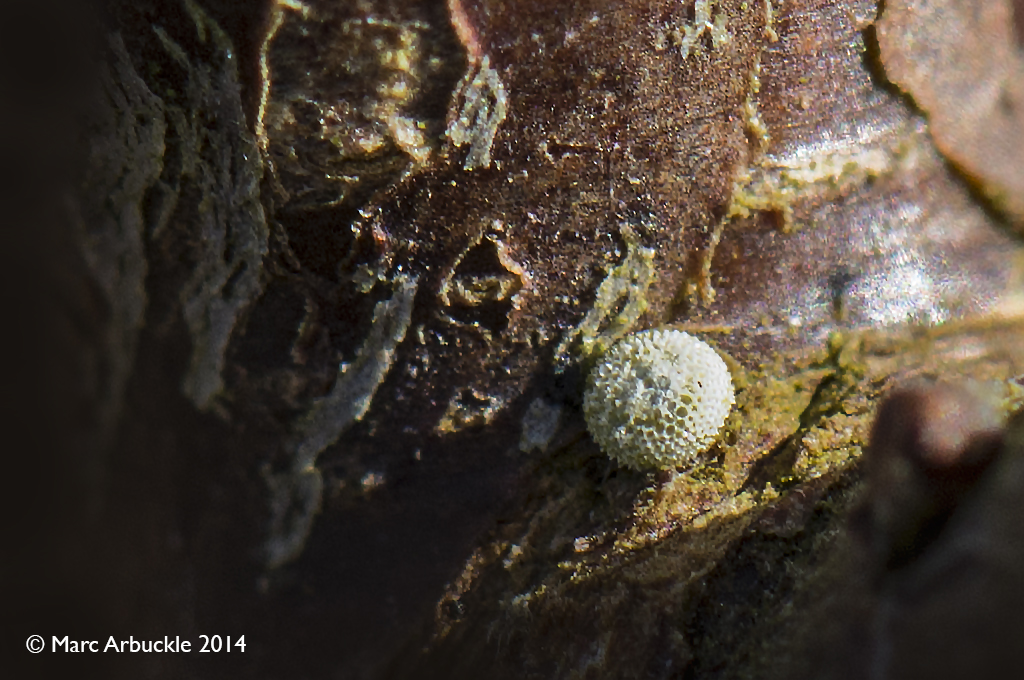
Brown Hairstreak butterfly egg

The thick overwintering egg case of Thecla betulae

Apologies for my absence. Some of you may be aware that England has been getting a bit of a battering weather-wise. Storm after storm has hit southern Britain giving us almost biblical amounts of rain. It’s felt like it has poured virtually non-stop since December. We’ve had the wettest January since records began. February has been much the same leaving most of Somerset under water.

Read more

Spiced orange

Comma Butterfly – Polygonia c-album (Female)

Polygonia c-album

This wet and cold weather will soon kill off the remainder of our summer insects, but quite a few of our butterflies will survive by hibernating. These include the Brimstone, Comma, Peacock, Small Tortoiseshell and to a lesser extent the Red Admiral (as the majority of these will migrate south back to the continent).

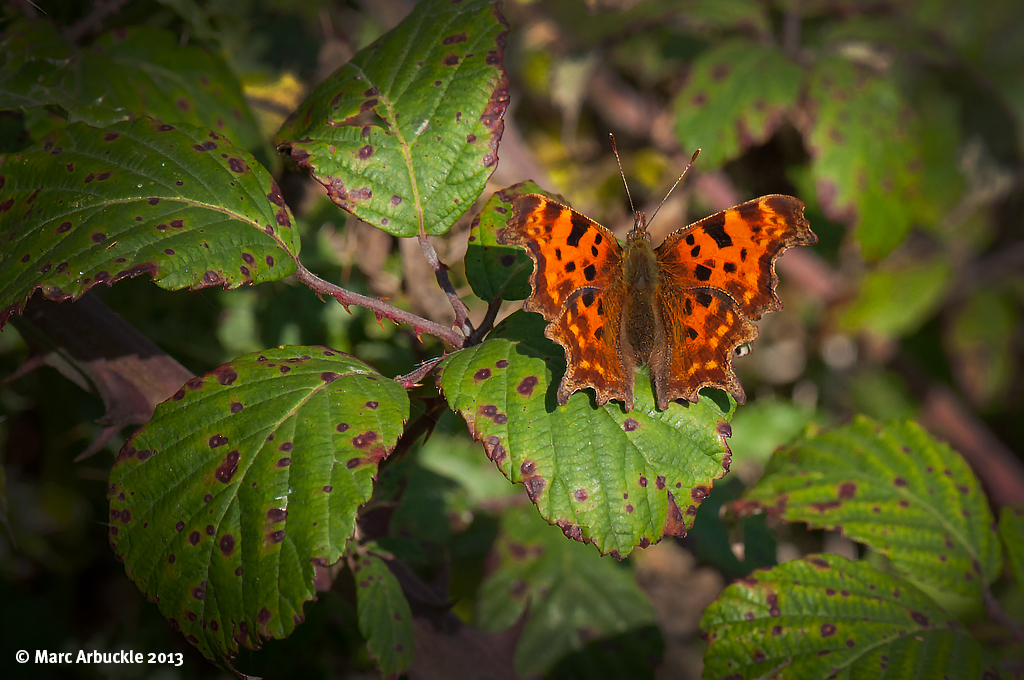
However, the business of finding a suitable spot and settling down for winter is a gradual process. So it is still possible to see a few butterflies on a sunny autumn day, particularly if you scan a good patch of bramble. My current favourites are the pristine, late-emerged specimens of the Comma Polygonia c-album. Basking in the sun with their wings wide-open these raggedy-edged, spiced-orange beauties really do stand out against the dark green leaves. But when, as in the photo below, they have their wings folded, they can be slightly harder to spot.

But that’s a good thing as it is this dark cryptic camouflage and irregular outline that will help keep them safe amongst the dry leaves of winter. Hiding them from the prying eyes of hungry birds and spiders.

Note the characteristic white mark or ‘comma’ on its rear underwing which gives this butterfly its common name. Personally I think it looks more like a squashed ‘v’ but let’s not get into an argument over aurelian typography.

If it survives the winter then it can be one of the first butterflies on the wing next year with sightings as early as January. And I for one will be glad to see it.
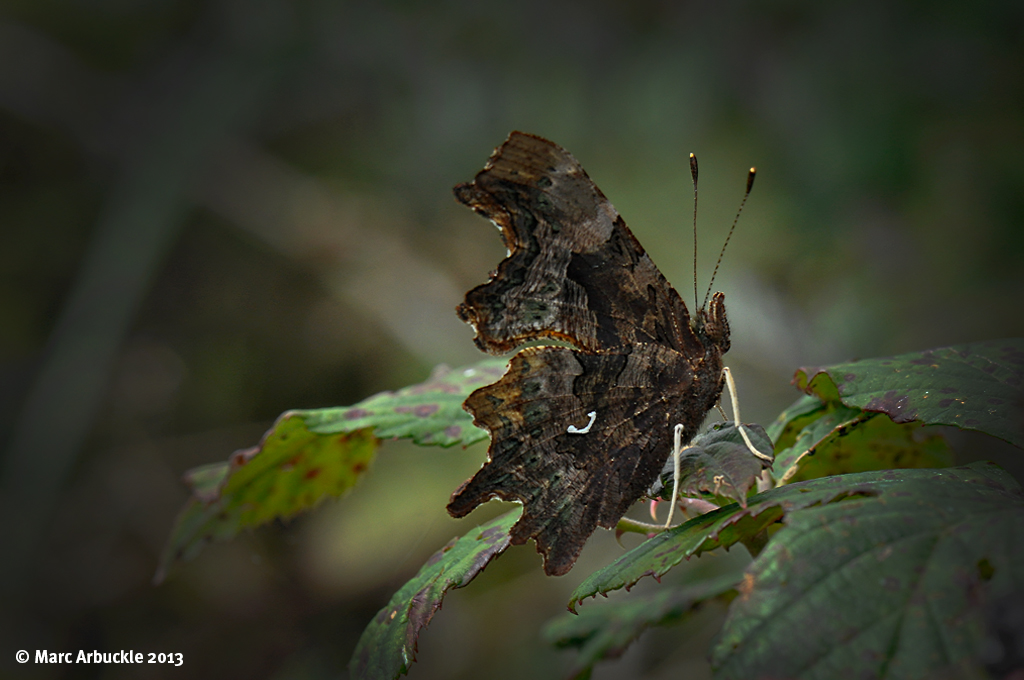
Comma butterfly with wings closed – Polygonia c-album (Female

Polygonia c-album

The Clouded Yellow

Clouded Yellow – Colias croceus (Male)

Colias croceus – Male

The Clouded Yellow Colias croceus isn’t a butterfly most of us get to see every year. It’s a summer migrant from southern Europe. If you live near the coast in Devon or Dorset and you’re the type of person that looks then you might get to see one or two each year. But further north you can go for years without seeing one at all. In nine out of ten years it is scarce. Then for reasons that we don’t fully understand we get an invasion. A glorious ‘Clouded Yellow year’ where numbers can be exceptional and individuals can be seen throughout the country and if we are truly blessed as far as southern Scotland.

Sadly the year after, again for reasons we don’t fully understand, numbers can be extremely poor.

So having spotted a dozen or so on Saturday afternoon at Martin Down NNR in Hampshire, I did the only sensible thing and went back again on Sunday morning. Well, that and the fact that my photos from Saturday were truly shocking. In my defence they’re tricky to photograph in as much as when they land they immediately fold their wings, plus they are all too easily spooked.

As you can see the underside is attractive enough but you really need to get out there and see them flying to see the upperside which is rather stunning – something not lost on the Victorian collectors. Both upper wings are a warm sulphur yellow with black margins. The upper with a single black eye-spot, the lower with a double dark orange, yellow-edged eye-spot. For a change the female has the edge in colouration in that the black margin is sprinkled with bright yellow dots. These are absent in the male. The French have a good name for this butterfly ‘Le Souci’ (The Marigold) which is very descriptive of the upper wing colour.

I saw plenty of Clouded Yellows in Cyprus earlier in the year so it was great to see them here in good old blighty.

Gatekeeper or Meadow Brown?

Gatekeeper Butterfly – Pyronia tithonus

Pyronia tithonus

This is the Gatekeeper Pyronia tithonus formerly and perhaps more appropriately known as the Hedge Brown or ‘Hedge Eye’. This butterfly can only be confused with a female Meadow Brown Maniola jurtina. However, in comparison it is much smaller and overall a much brighter orange. Where the Meadow Brown has one white spot in the centre of the black eye-spot on the upper wing, the Gatekeeper, as you can see, almost always has two. Also, with wings folded the Gatekeeper has a row of small white dots on its lower underwing, whereas the latter, if it has any, not all do, will have small dark dots. Plus, you are much more likely to find it like this, wings wide-open, basking on a leaf in a hedgerow soaking up the sun.

But beware, both species are subject to variation. I’ve seen Meadow Brown’s with two white spots and Gatekeeper’s with one. So it’s worth keeping a look out for aberrations. If you are lucky you may even find one of the heavily spotted multiocellata variations which can be very pretty indeed. Just remember to carry your camera, because of course I didn’t.

Read more

Small Tortoiseshell

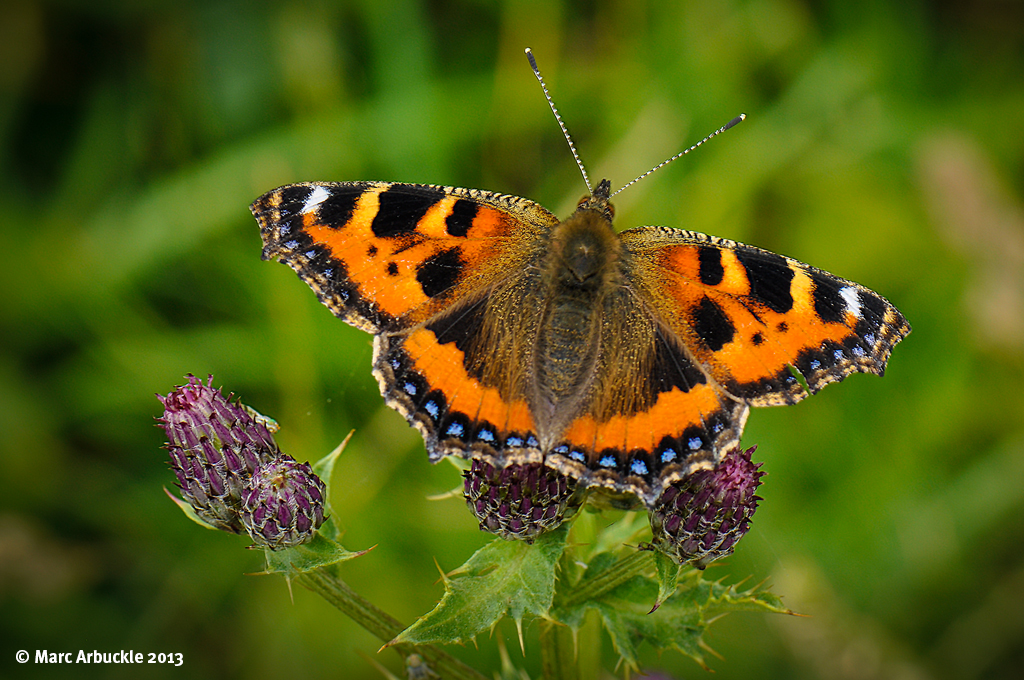
Small Tortoiseshell – Aglais urticae

Aglais urticae

This is a butterfly we’ve taken for granted. The Small Tortoiseshell Aglais urticae was once one of our most familiar and numerous garden visitors. Sadly it is no longer as common as it once was. In recent years, particularly in the south it has declined, possibly due to predation by the parasitic fly Sturmia bella. Somehow our buddleia bushes just don’t look quite the same without these butterflies nectaring on every other mauve, orange-centred flower head. But, let’s not get overly maudlin. Instead let’s reflect on what a stunning little insect this still is. Gorgeous orange set off with deft little touches of black, dabs of yellow and white, ringed with a necklace of brilliant turquoise. What’s not to like?

Read more

A morning with the Emperor and the Admiral

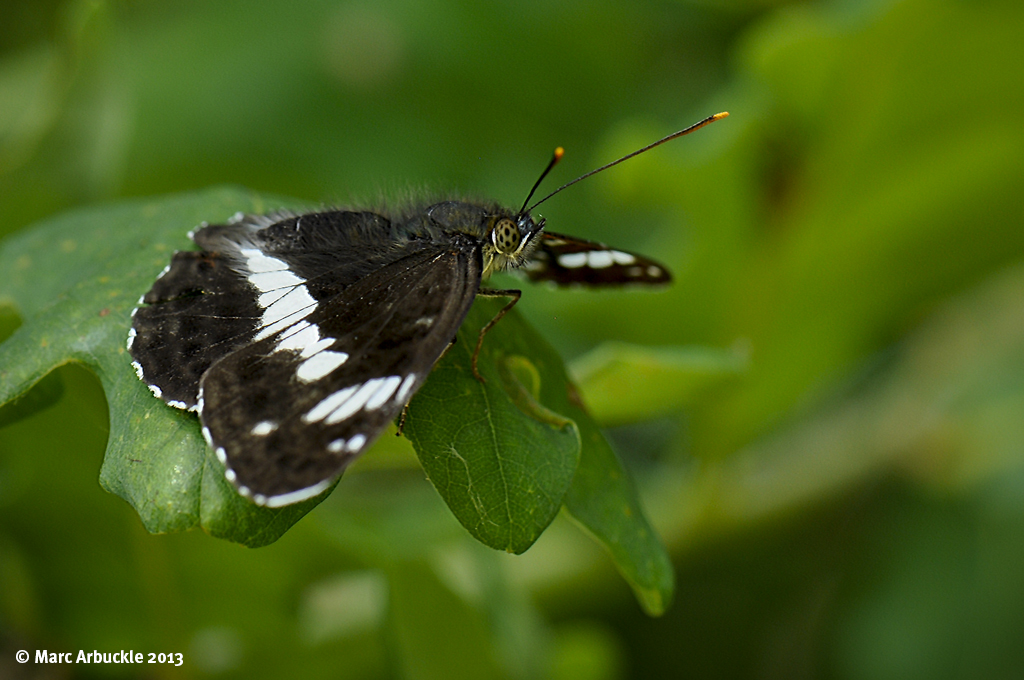
White Admiral – Limenitis camilla (Male)

Limenitis camilla – Male

I arrived at Bentley Wood to find the car park packed, not only with cars, but with people gazing upwards. The nearest chap whispered in hushed tones that we were in the presence of ‘His Majesty’ the Purple Emporer Apatura iris. A first for me. An elusive, almost mythical butterfly that until then I’d only read and dreamt about. I hadn’t imagined for one moment that one day I’d simply step out of my car and find it waiting for me. If I’d known, I would have had it cleaned and valeted.

Read more

Aerial zebras

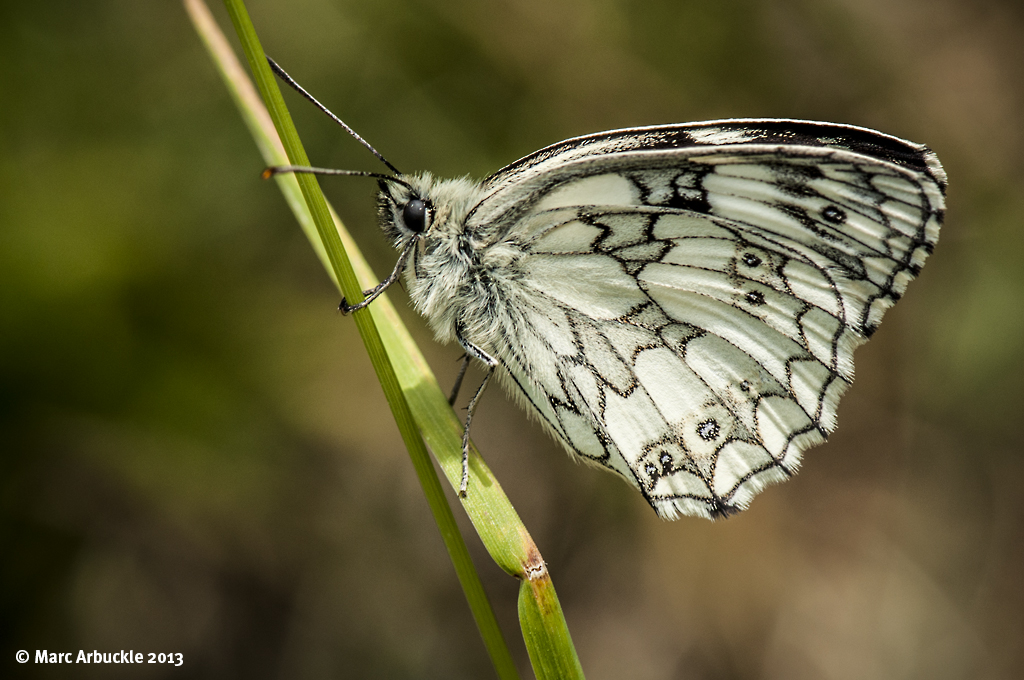
Marbled White Butterfly – Melanargia galathea (Male)

Melanargia galathea – Male

Readers of my last post about my visits to Collard Hill may have got the impression that it was a disappointment. It wasn’t, the view from the Polden Hills is breathtaking and freshly emerged specimens of the monochromatic magnificence that is the Marbled White Melanargia galathia were abundant. I’m often asked which is my favourite butterfly and that’s a really tough call as I have so many. But, this is possibly my favourite ‘white’ even if technically it’s a ‘brown’.

Read more

The return of the Large Blue

Large Blue Butterfly – Maculinea arion (Female)

Maculinea arion – Female

Sunday before last I drove down to Somerset to catch a glimpse of the Large Blue Maculinea arion. Always a rare insect, our native Large Blue became extinct in 1979. It has since been reintroduced from stock brought in from Sweden to various sites in southern England, most of which remain ‘secret’. However, Collard Hill which is owned by The National Trust is open to public access. Thirteen years ago larvae were introduced there and the population has now grown to the point where it is one of the best sites in Europe to see this rare butterfly. Well, at least it has been. Last year’s extremely wet summer and this year’s cold spring haven’t helped. But that’s not the only problem it has to contend with.

Read more

Common Blue

Common Blue – Polyommatus icarus (Male)

Polyommatus icarus – Male

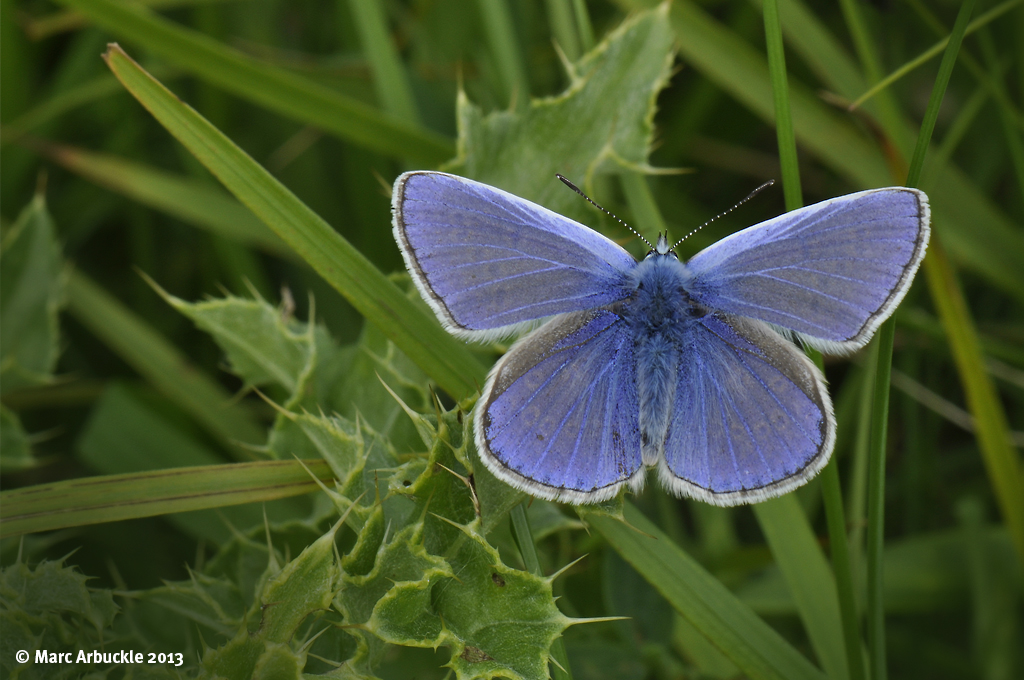
Last Saturday morning was spent pootling about on a favourite chalk ridge taking photos of powder blue butterflies and scarlet moths. All rather glorious really. It was warm and overcast, buzzards were mewing overhead and skylarks were ascending to the heavens. I was in heaven too as the conditions were ideal for photography and despite the fabulous weather I had the whole hillside to myself – didn’t see another soul. How fab is that?

Read more

His Grace and The Grizzle

Grizzled Skipper Butterfly – Pyrgus malvae

Pyrgus malvae

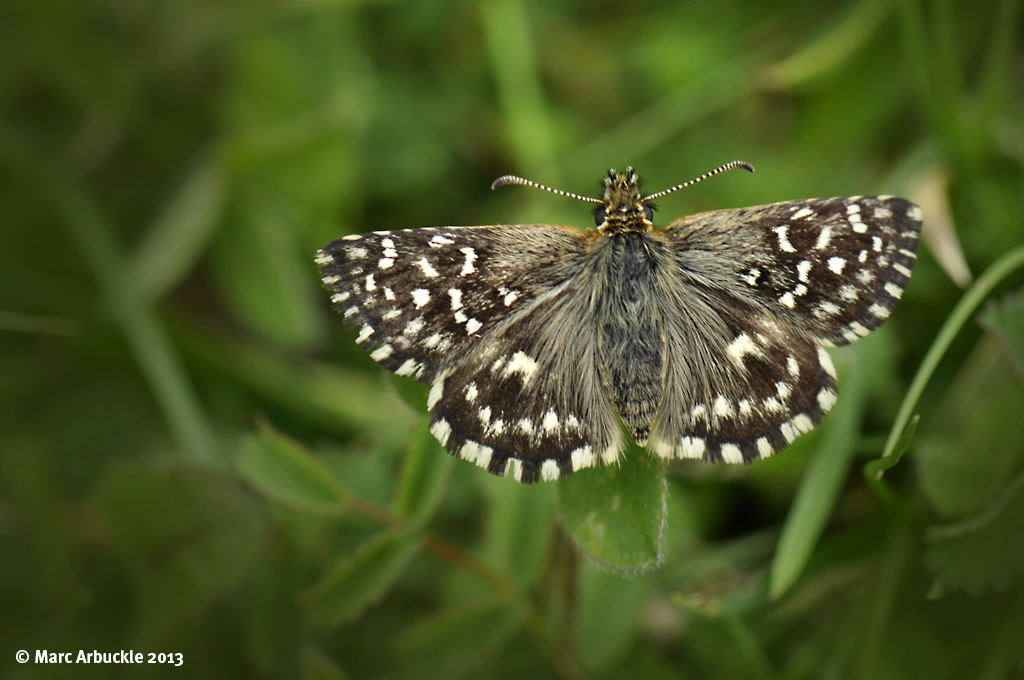
Slowly working my way across a hillside covered in yellow cowslip searching for my first Duke of Burgundy butterfly of 2013 I notice a moth-like flicker of dark chocolate brown arc into the dry grass further up the slope. With my eyes fixed on the spot where it lands I move cautiously upwards to find a freshly emerged Grizzled Skipper Pyrgus malvae. It’s not ‘His Grace’ but a real stunner all the same and another first for my year list.

Read more